Scholarex AI
The idea for Scholarex was born during a visit to my sister’s university.
Over chai and late-night library walks, I had the opportunity to chat with her friends
—brilliant researchers from diverse disciplines. As I listened, a common theme emerged: publishing academic papers is hard. Not just the writing—but finding
the right journal, adapting to formatting rules, citing correctly, and collaborating smoothly.I couldn’t stop thinking—what if I could make this easier with design and AI?
Aspiring researchers face a multitude of challenges in the academic publishing process:
Ensuring their research is impactful and well-articulated
Verifying the reliability and credibility of their sources
Managing peer reviews and collaborating across institutions
Navigating complex journal guidelines and formatting rules

Can AI streamline the journey from research to publication?
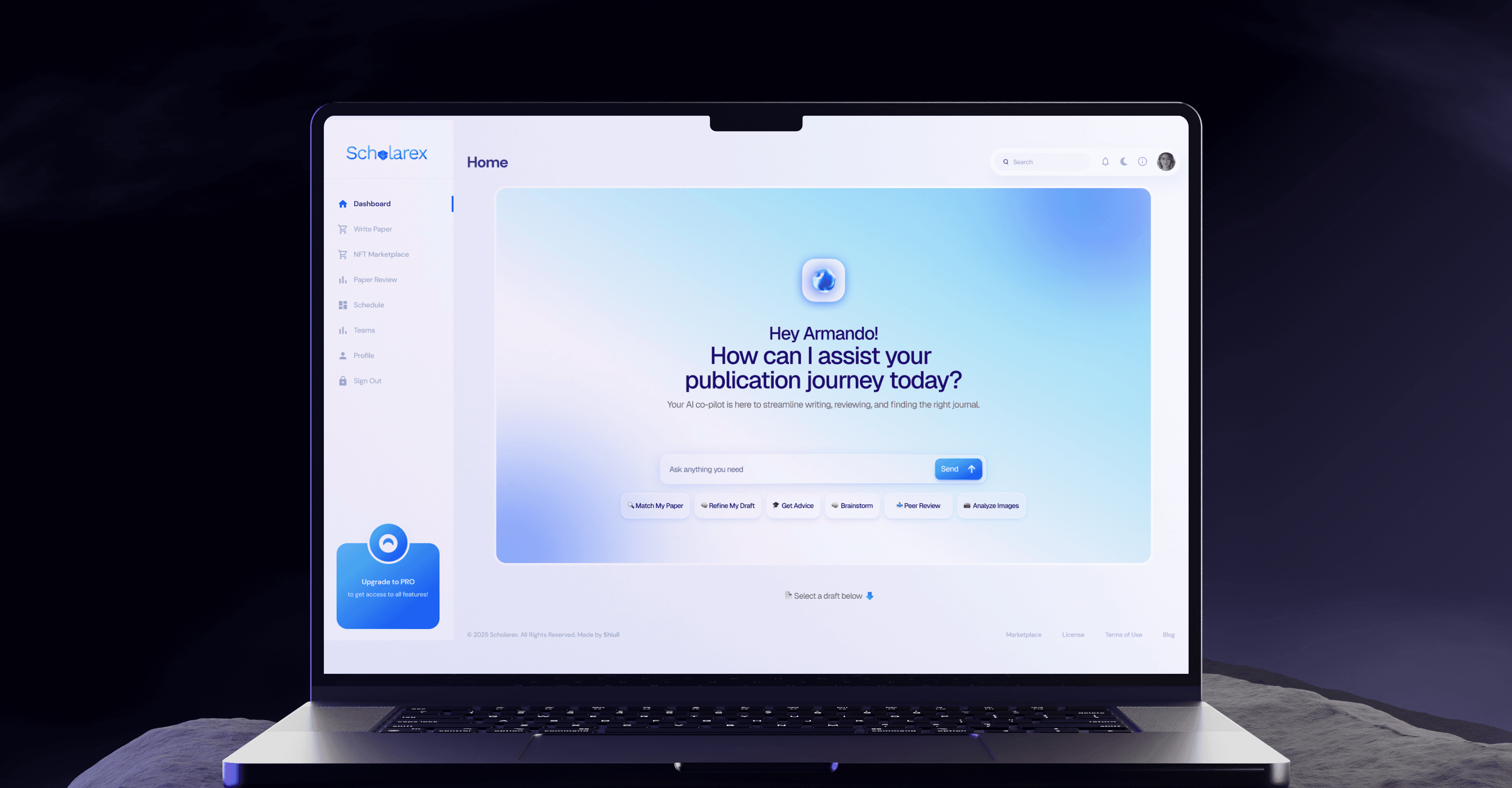
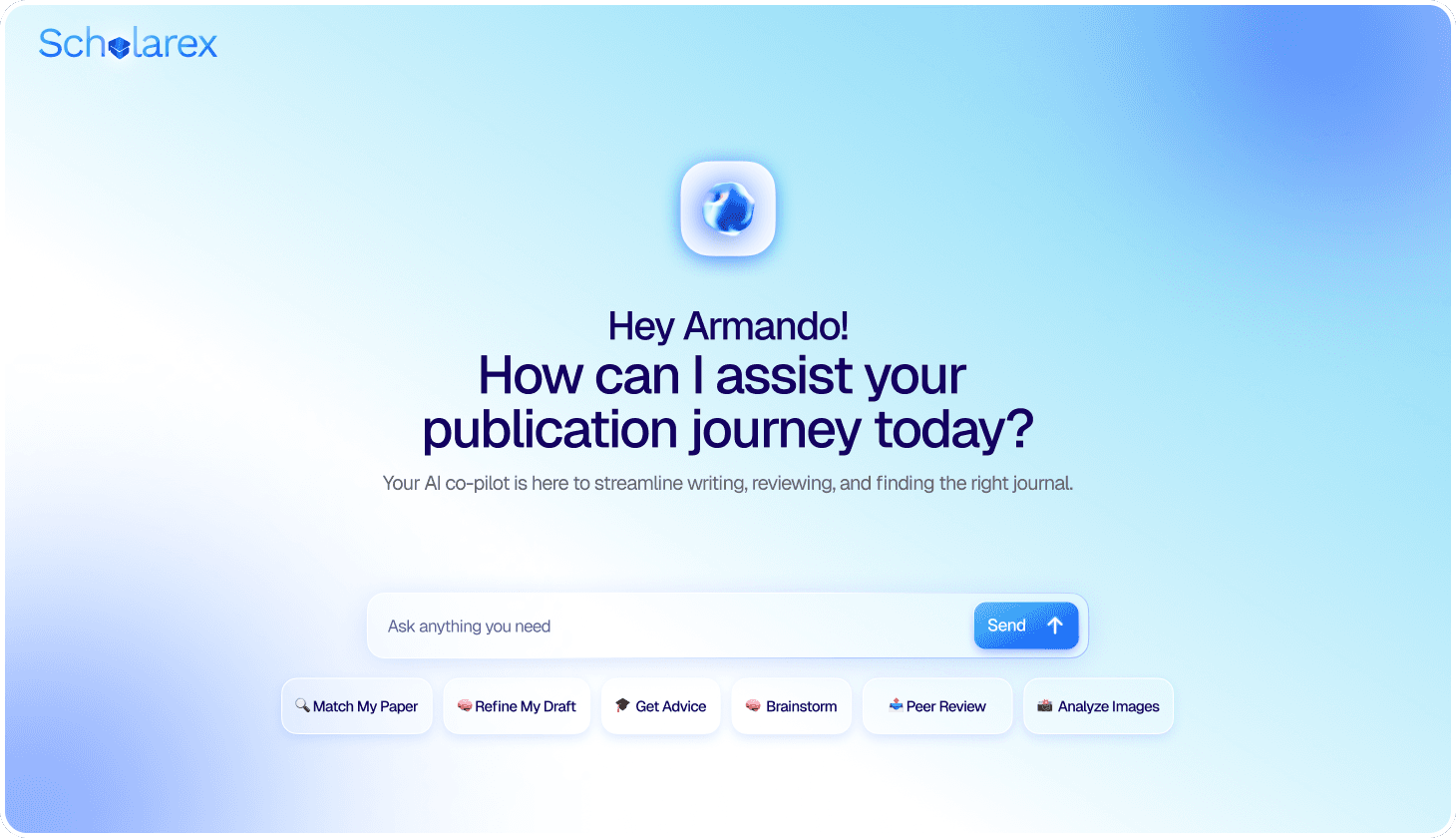
I envisioned Scholarex as an all-in-one research companion.
An AI-powered platform to support the entire academic publishing process with features like:

✍️ AI Writing Assistant
🤝 Collaborative Writing
Shared workspace with co-authors and visibility control


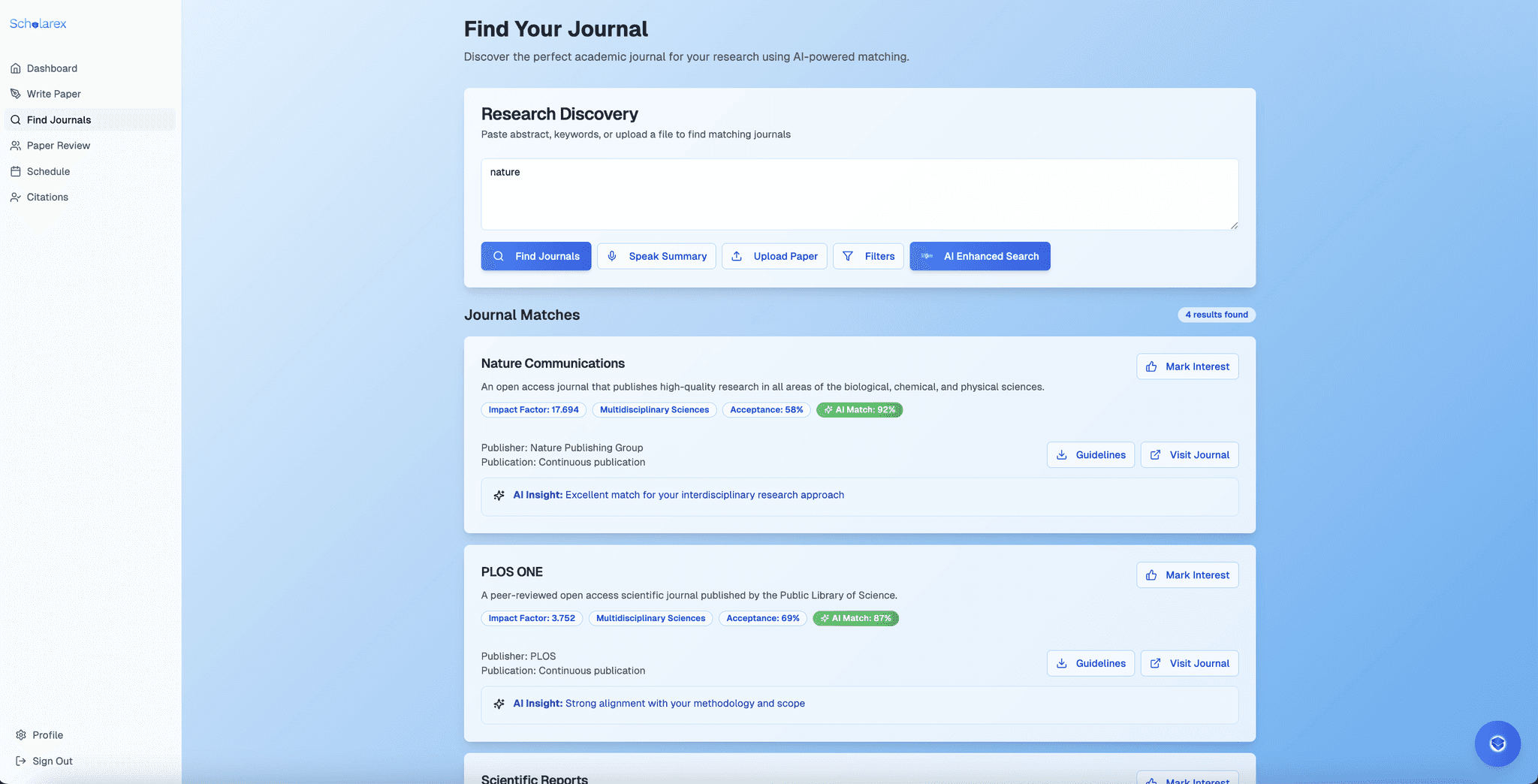
🔍 Publication Matcher
Recommends relevant, high-impact journals based on your draft
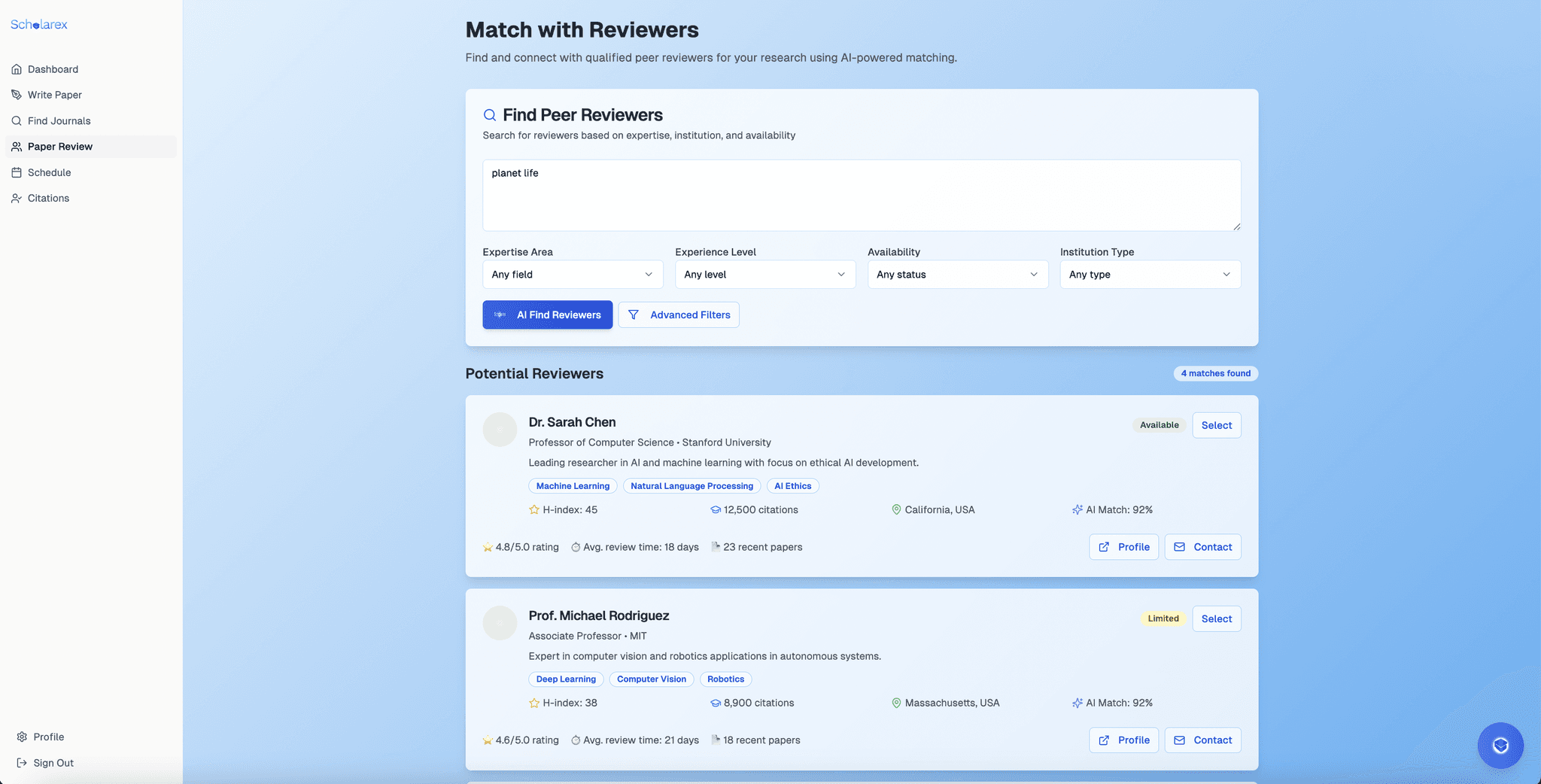
🧠 Smart Reviewer Connect
AI-matched peer reviewers + video call & messaging options

Context
Opportunity
Process
Solution
Takeaway
To design a tool grounded in real needs, I conducted both quantitative surveys and qualitative interviews.
✏️ Some User Survey Highlights I found interesting
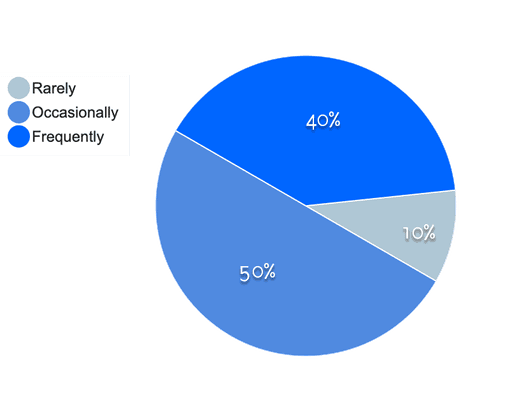
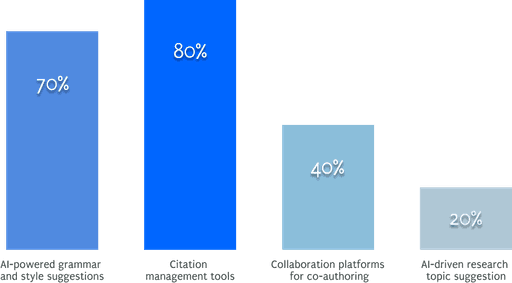
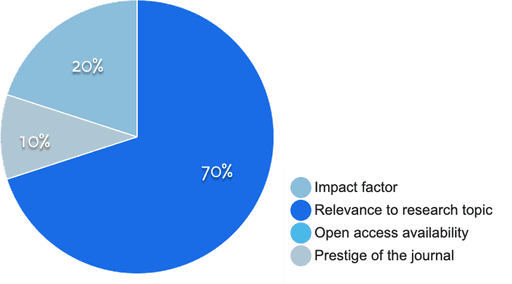
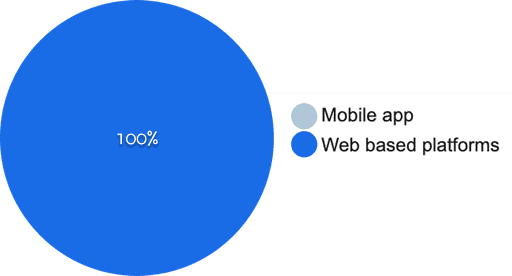
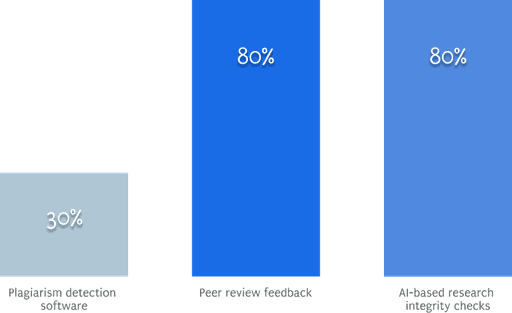
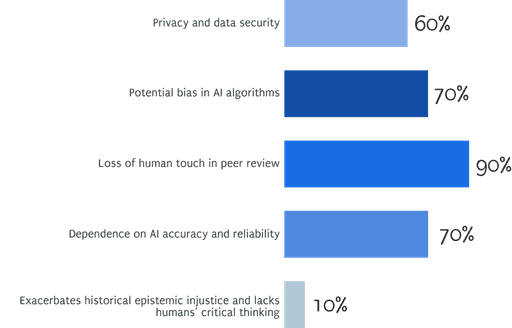
These insights guided feature prioritization and clarified what researchers truly want—and don’t want.
🎙️ User Interview Takeaways
From 1:1 interviews with early-career researchers across disciplines, I unearthed deep behavioral insights
Mika (Earth Sciences)
"Templates for specific journals would save me hours."
“Credibility is everything—we need transparency in AI suggestions.”Shibani (Community Psychology)
“I use Notion like a second brain. But it gets messy during citations.”
“Give me a way to track what I’ve read
—even when I take long breaks.”Masami (Postgrad Researcher)
“My workflow blends AI, Word, Zotero, and read-aloud editing.
Let me keep that flexibility.”Sandeep (First-gen Scholar)
“English is tough—I use ChatGPT to help, but citations still confuse me.”
🔍 To Synthesis all my research findings I clustered their needs and frustrations, identifying key patterns
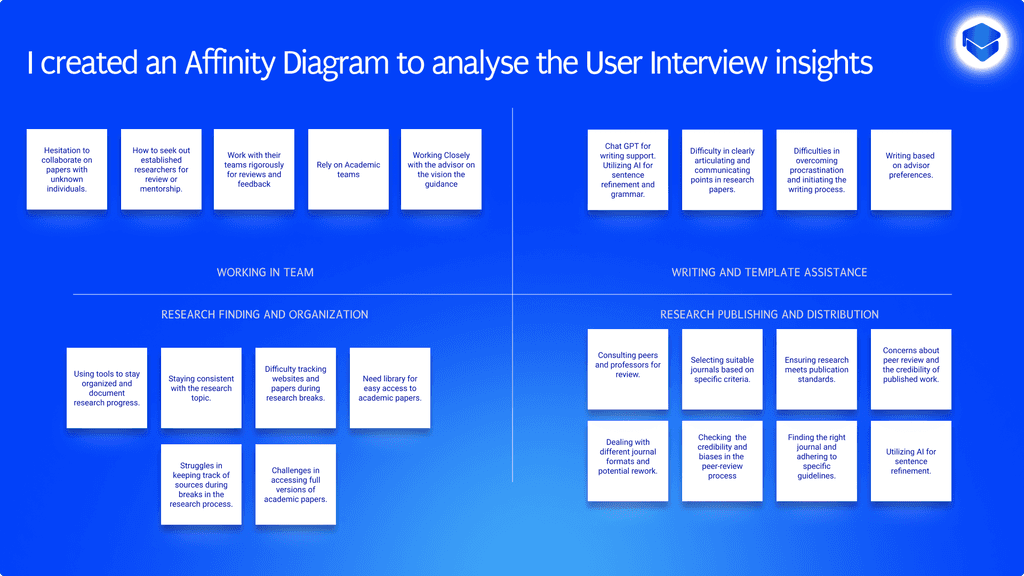
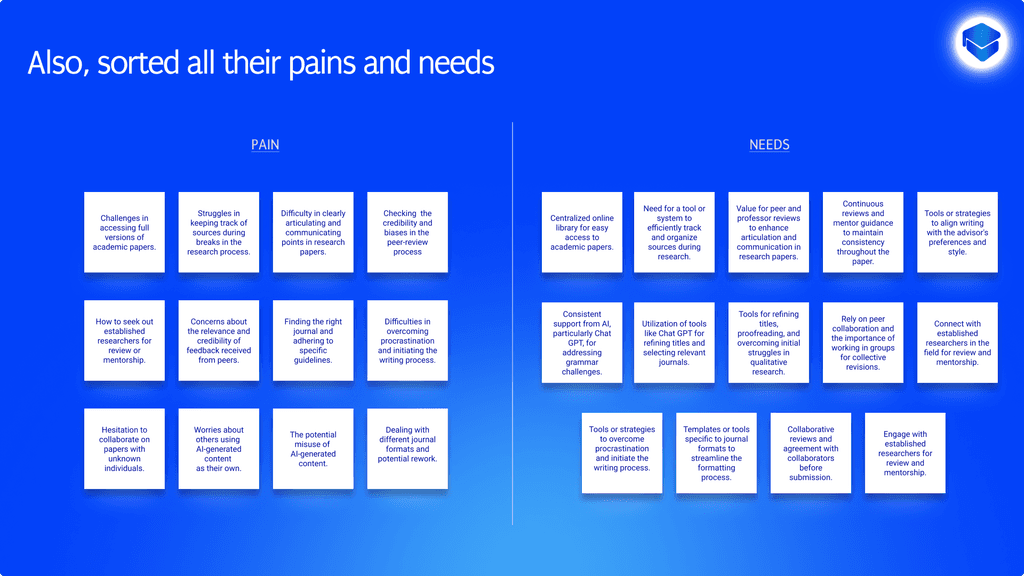
Two key insights from my research that shaped the foundation of Scholarex were:
Researchers struggle most with writing, formatting, and citation management—
highlighting the need for an AI assistant that offers real-time editing, structural guidance, and seamless referencing tools.While collaboration is essential, users want full control over their co-authoring experience
inspiring features like customizable collaborator access, reviewer matching with profile previews, and private notes for individual workstreams.
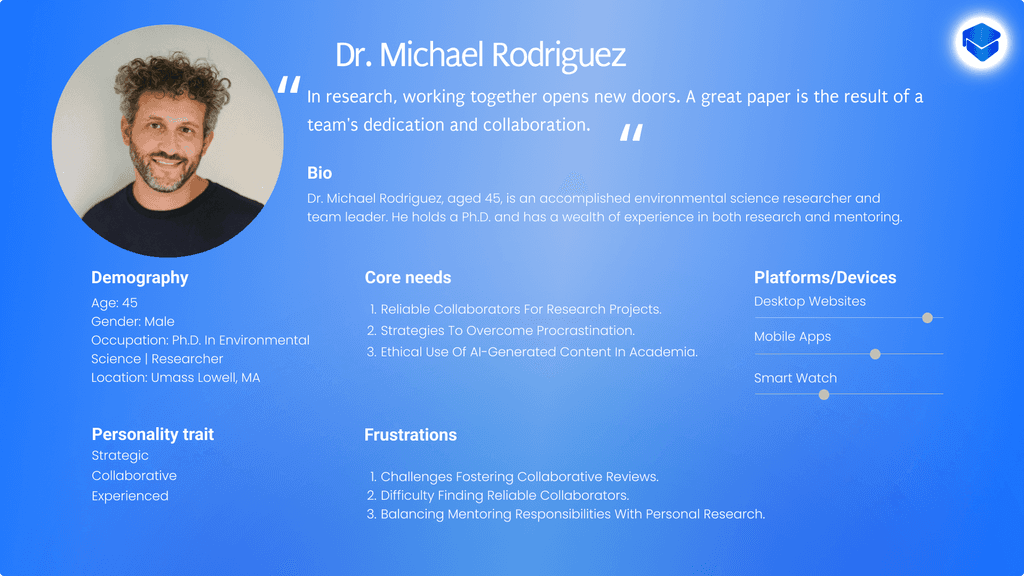
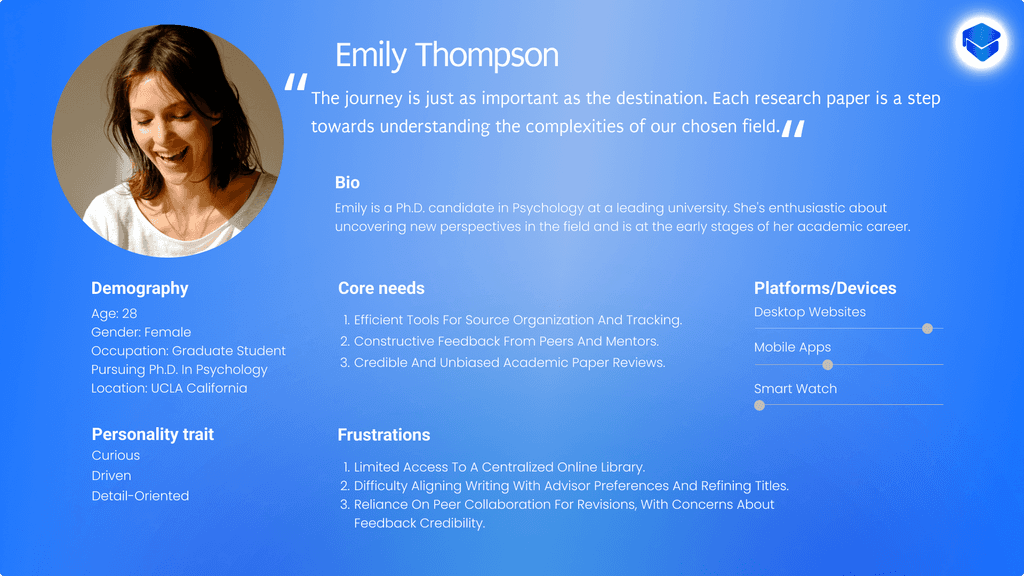
👤 I crafted two primary personas to represent Scholarex’s users:
🗺️ User Journey Map
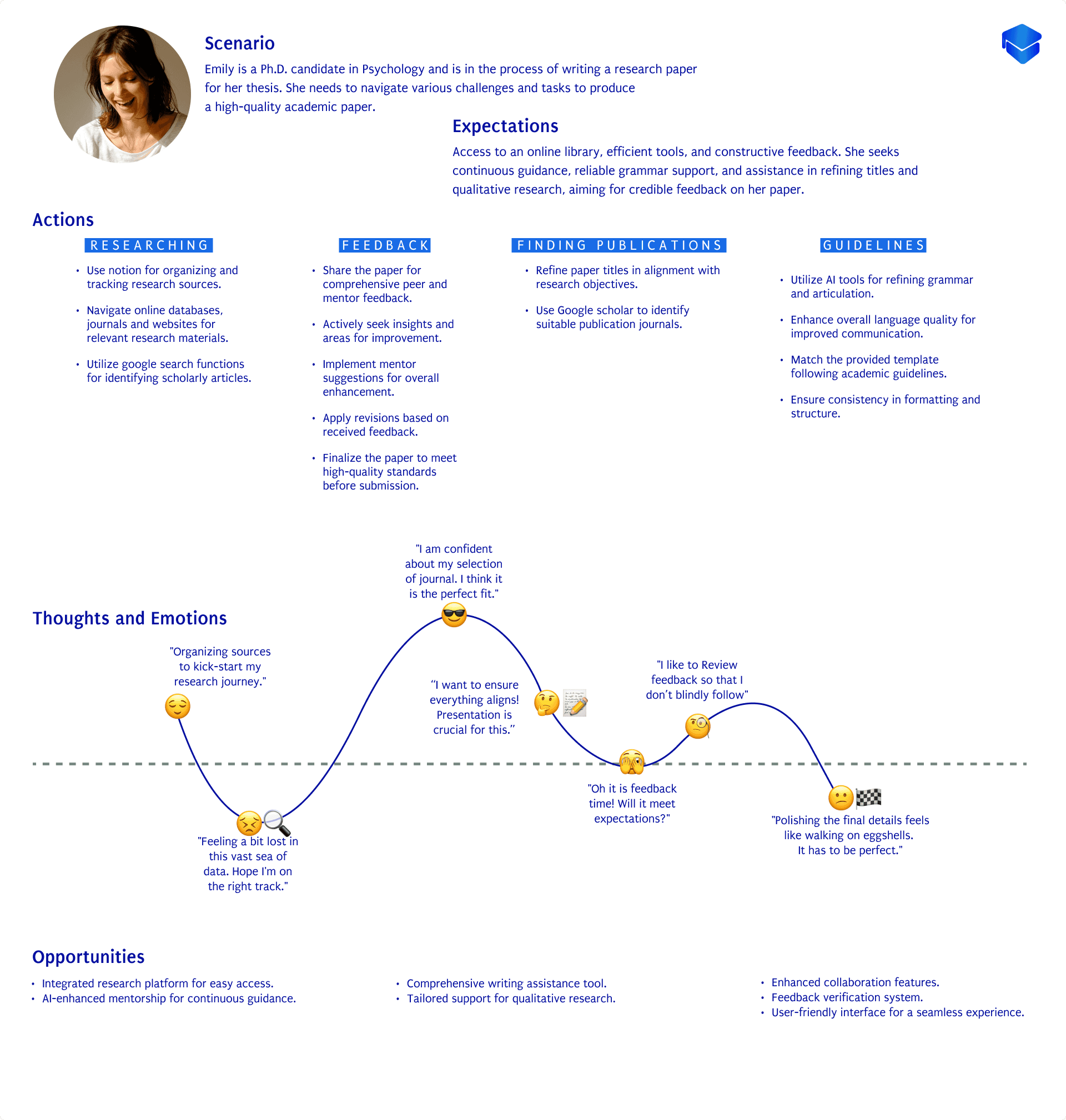
From the journey map, key opportunity areas emerged: an integrated research dashboard, feedback verification, AI-powered mentorship and collaboration, tailored publication discovery, and seamless formatting and referencing.
💡 HMWs (How Might We(s)…)
How might we provide guided collaboration and mentorship tools to help researchers publish with confidence?
How might we offer real-time AI feedback that aligns with each journal’s expectations?
How might we simplify access to credible journals and verified reviewers?
🧑💻 POV Statement
Novice researchers need to effortlessly gather, organize, and co-write impactful academic papers—while integrating feedback and meeting journal standards—without losing time to formatting chaos.
Problem
Opportunity
Process
Solution
Takeaway
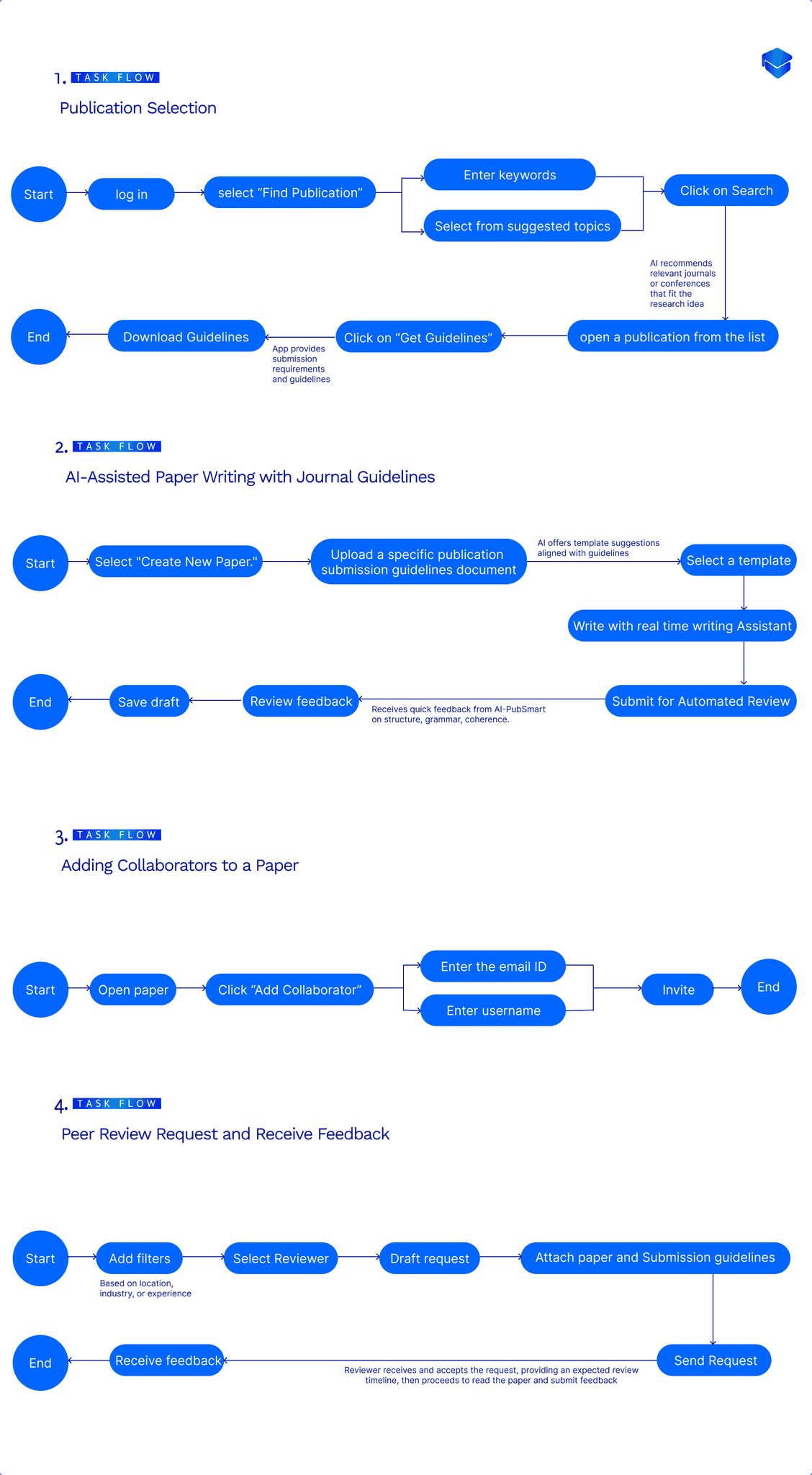
To bring these insights to life, I mapped out key user task flows that reflect how researchers would interact with Scholarex to simplify and elevate their publishing journey.
🧪 Prototype Testing & Iteration
I tested the mid-fidelity prototype with 6 participants and iterated based on real-time feedback
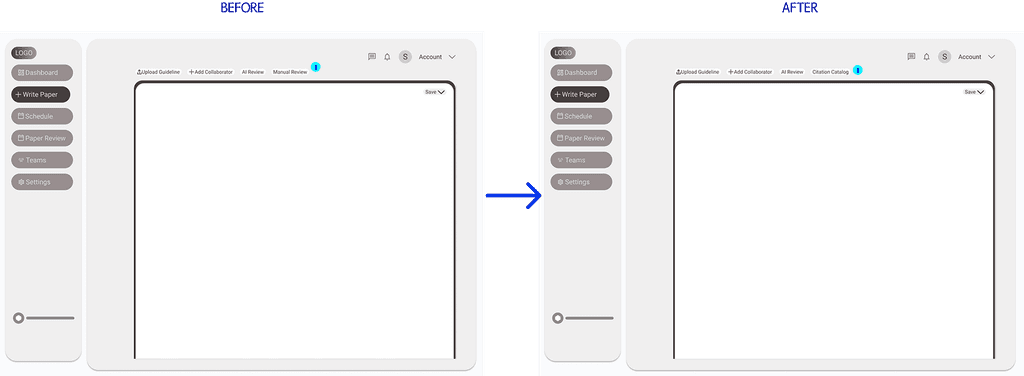
🔁 Citation Catalog Button Added: Boosted efficiency for paper referencing
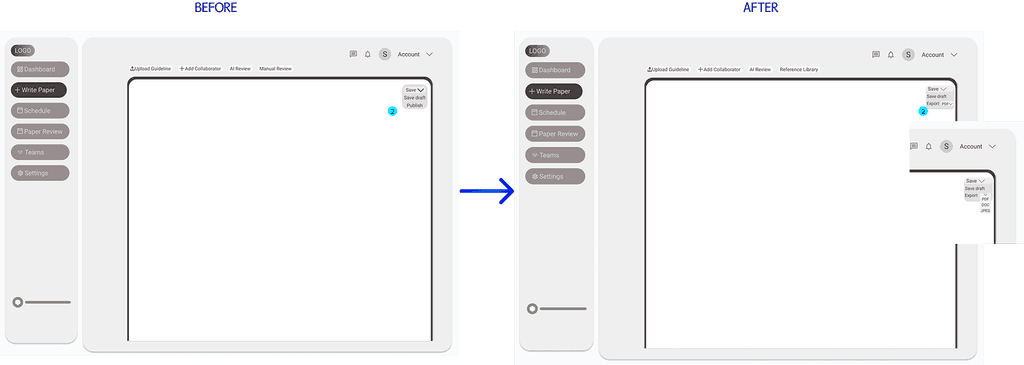
⬇️ Export Options (PDF, DOC, JPEG): Replaced “Publish” to support users’ varied workflows
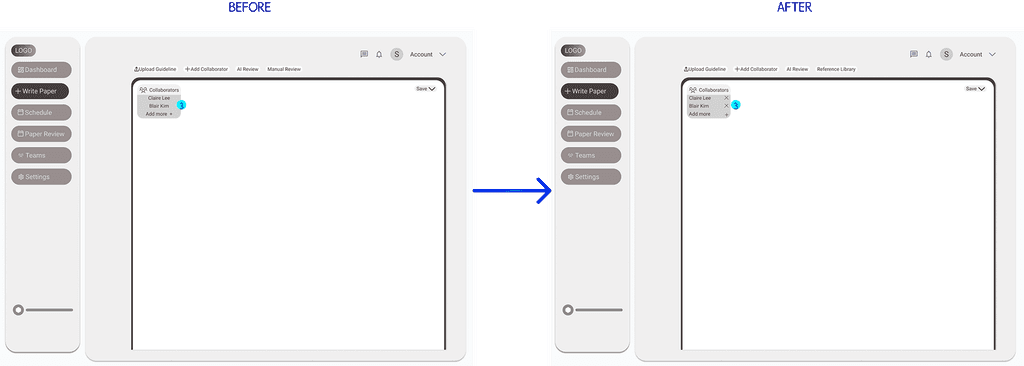
👥 Remove Collaborator Feature: Allowed more control over co-authoring
📋 Real Reviewer List Page Added: Users wanted to compare reviewer profiles before selection
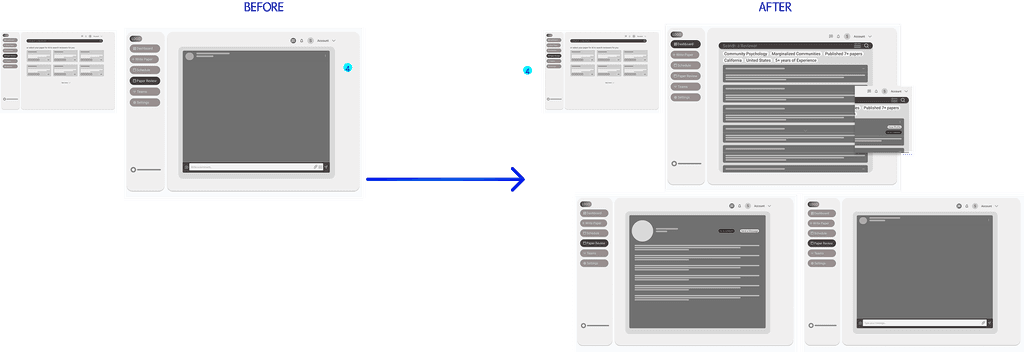
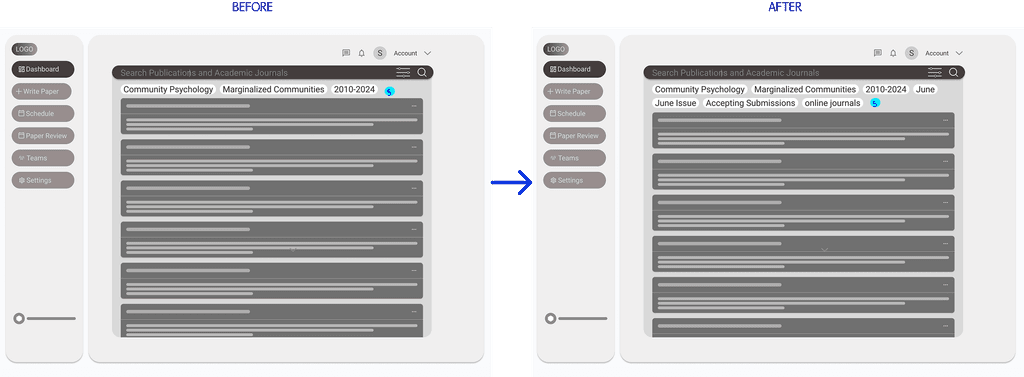
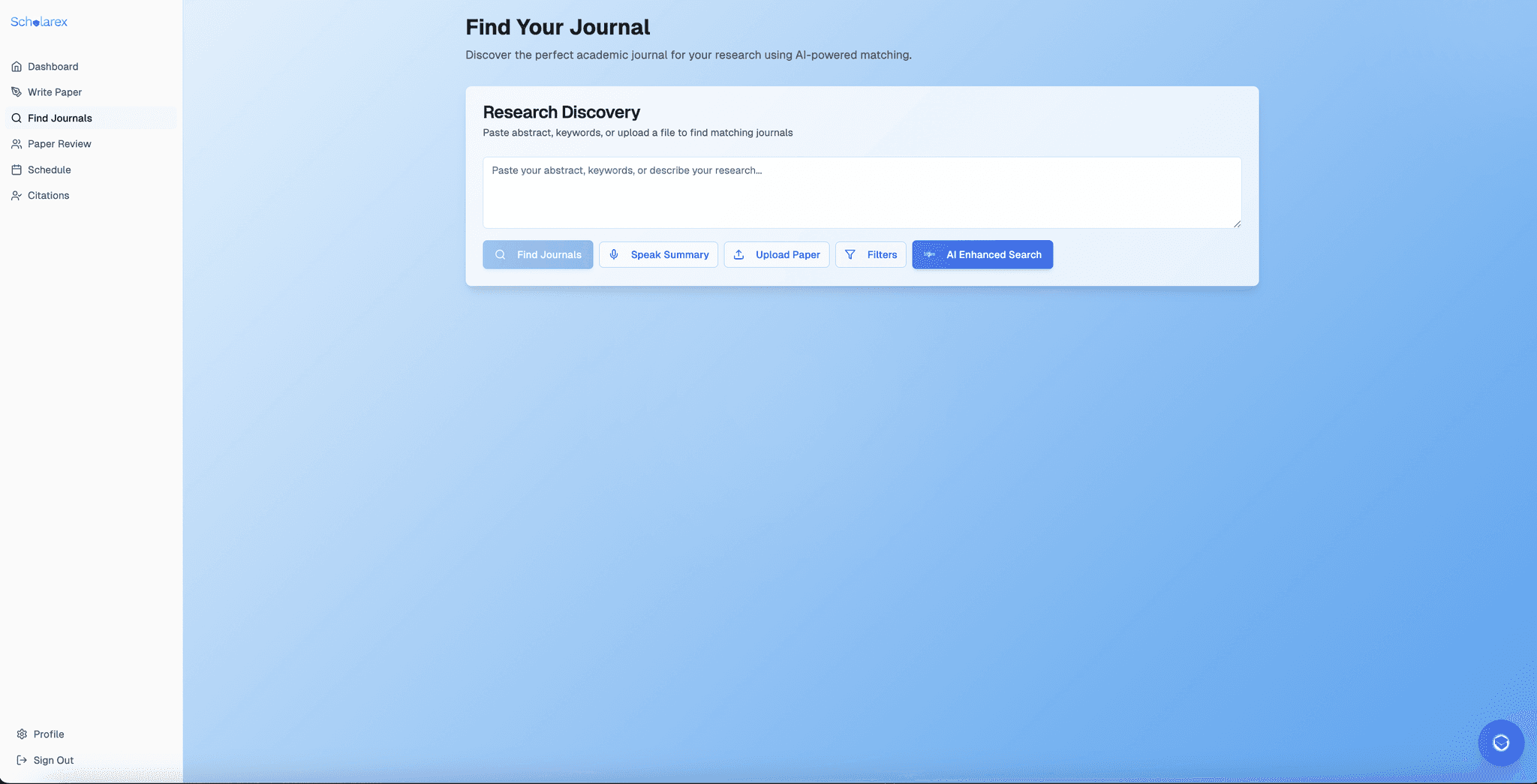
🧭 Search Filters (Issue Date, Active Journals, Online Only): Predefined filters made exploration intuitive
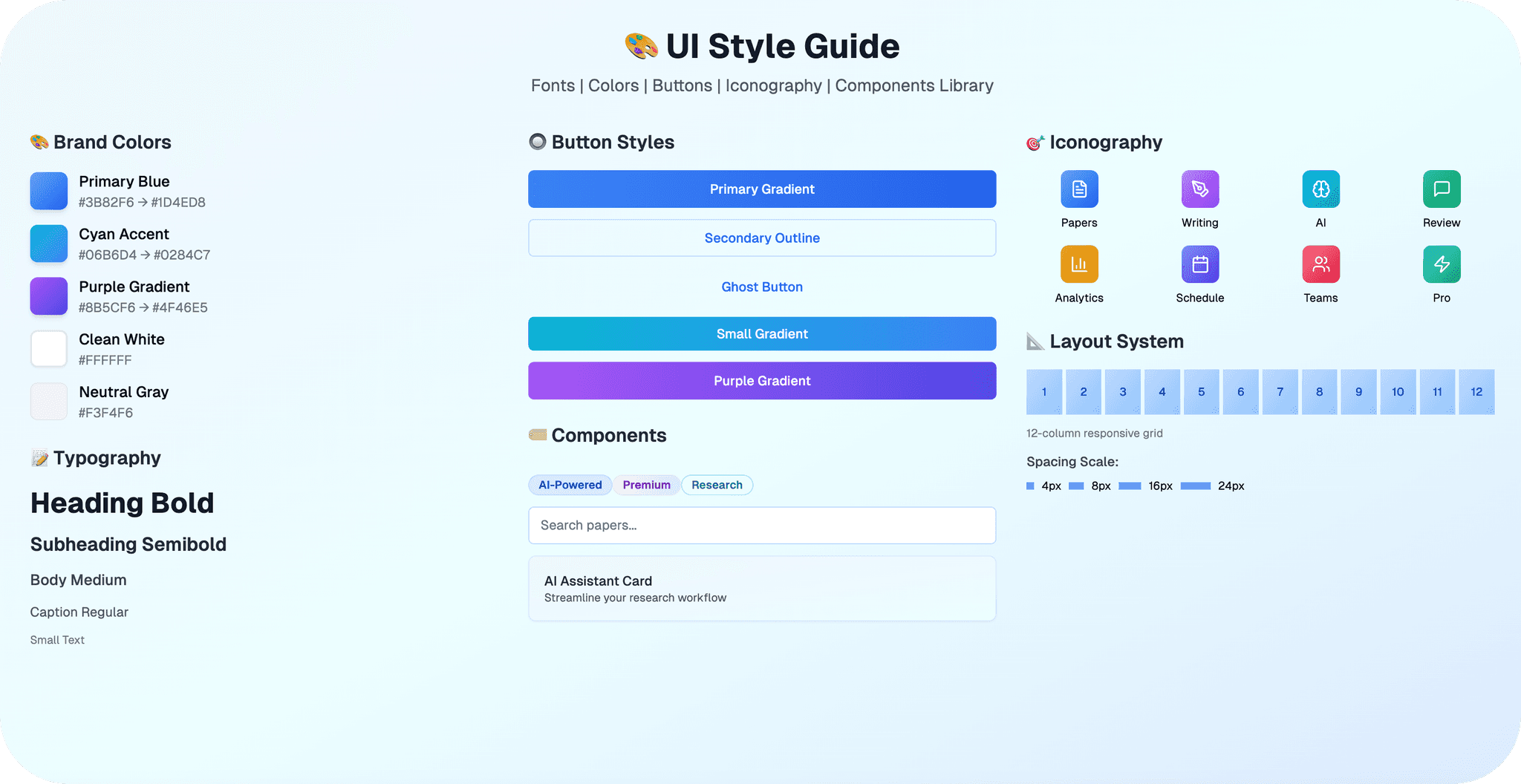
🎨 To ensure consistency, clarity, and a sense of trust throughout the platform, I crafted a visual style guide that reflects Scholarex’s intelligent yet approachable personality.
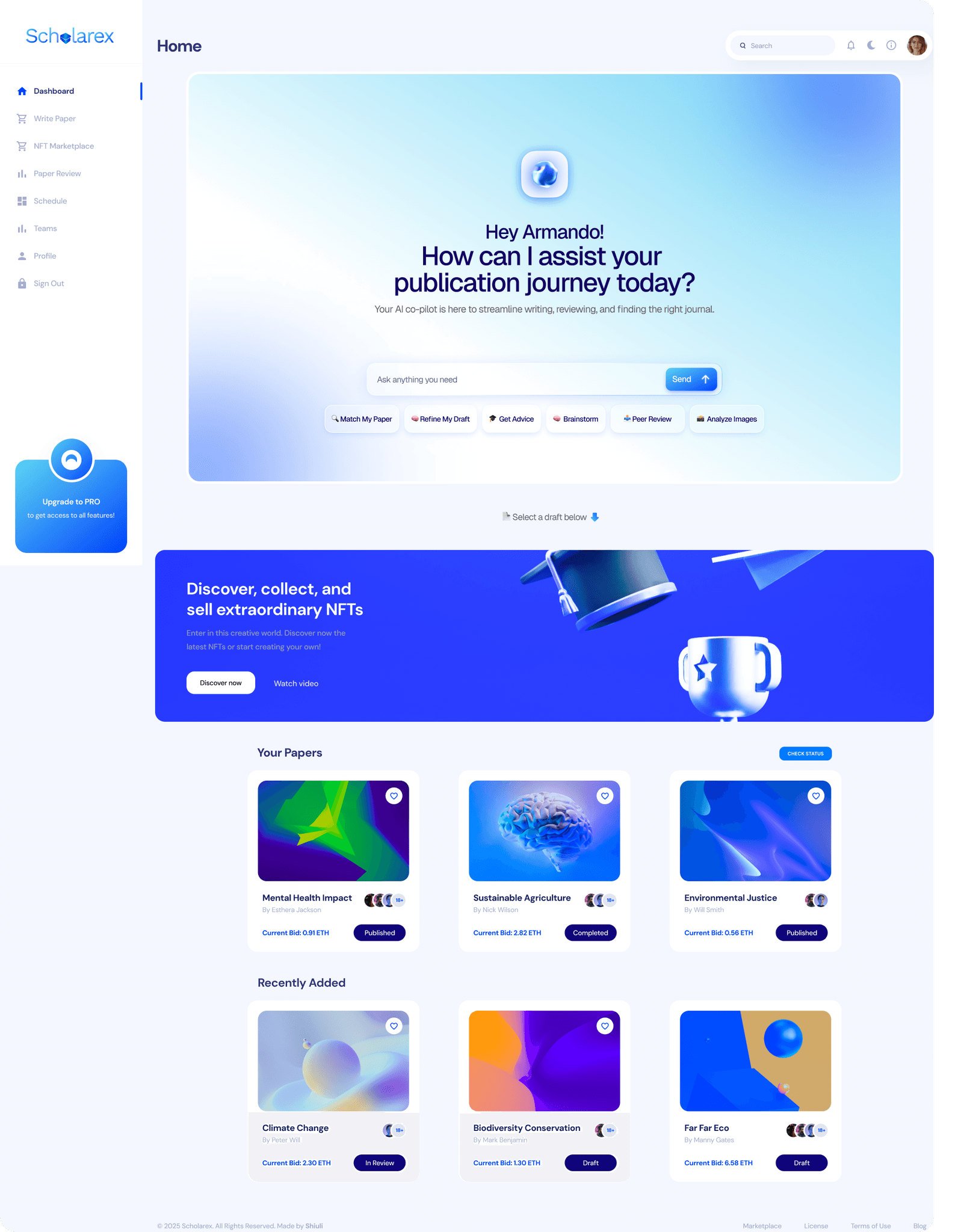
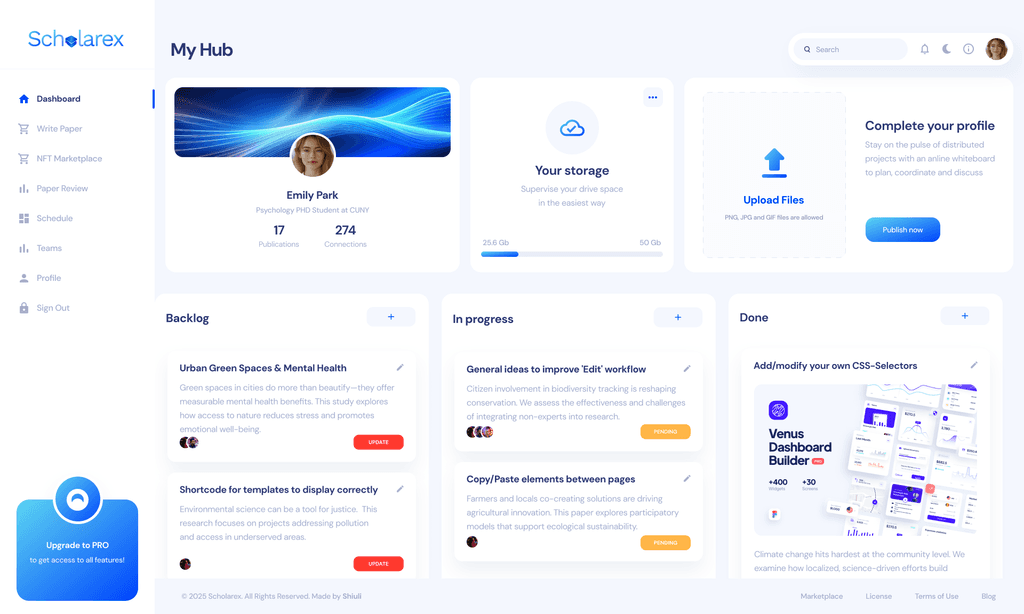
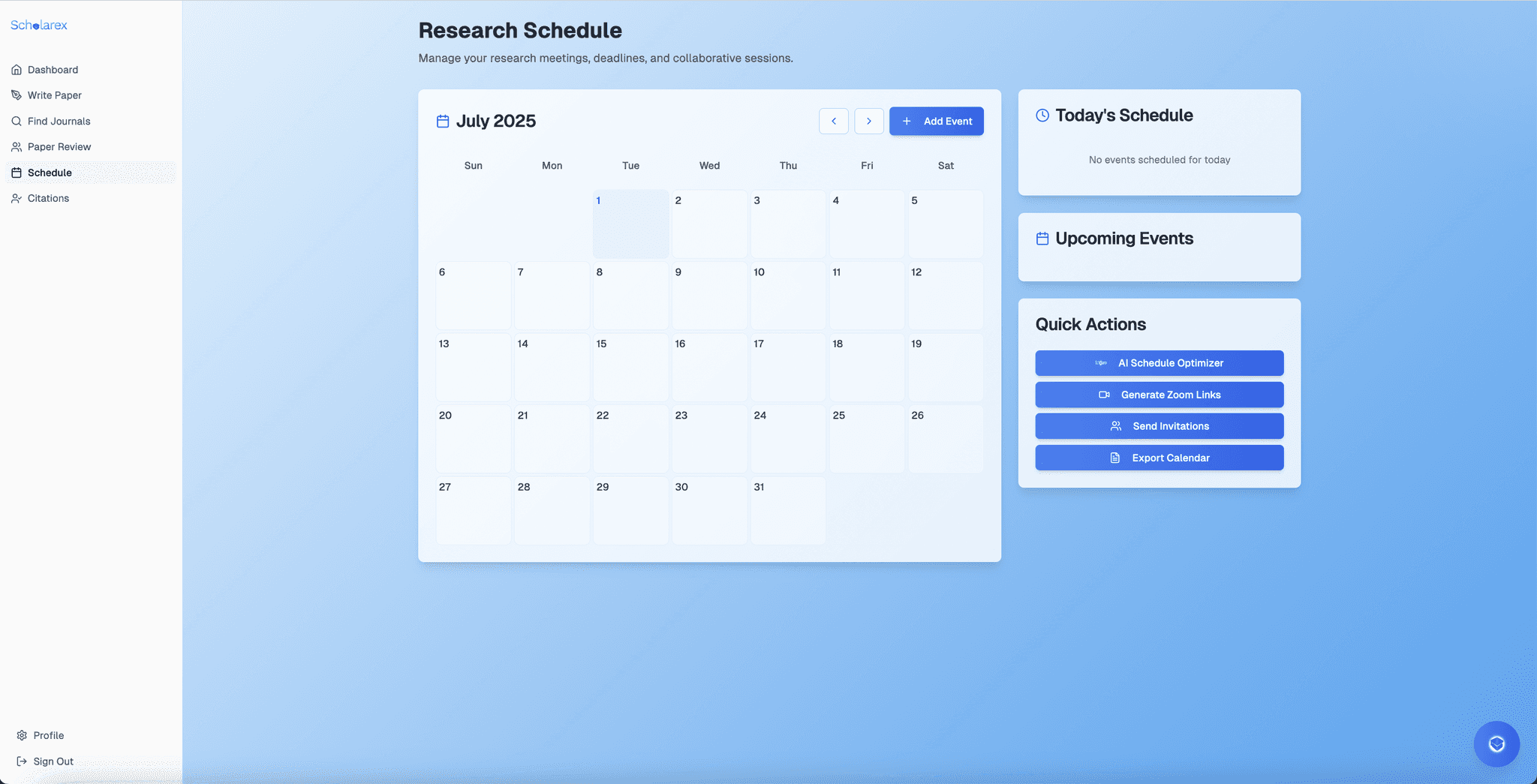
🎨 During the design Journey the below was my my first High rez iteration of the AI Product
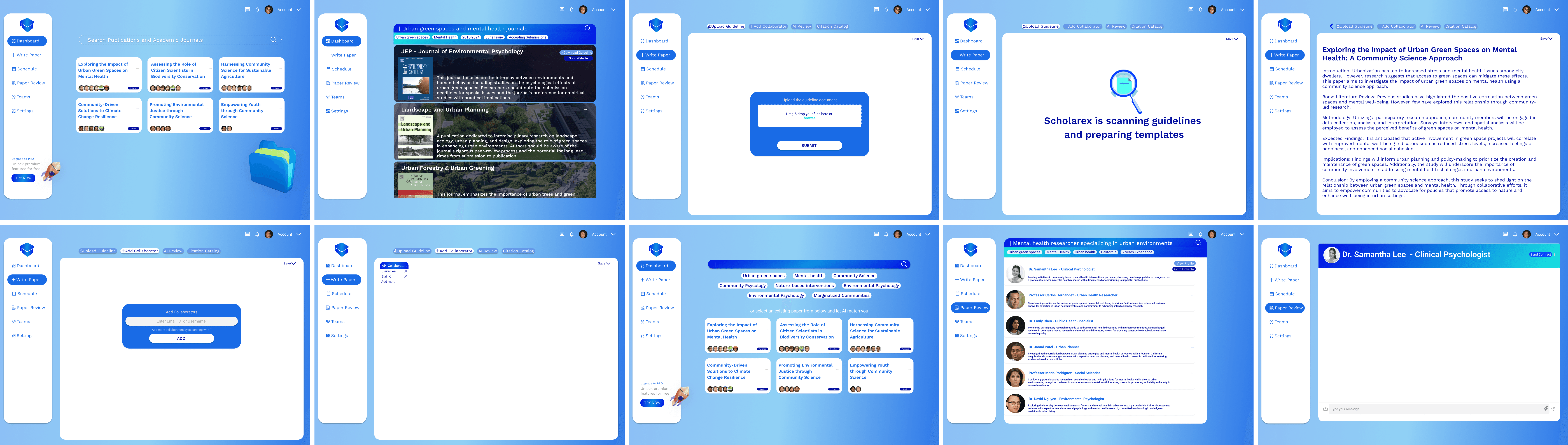
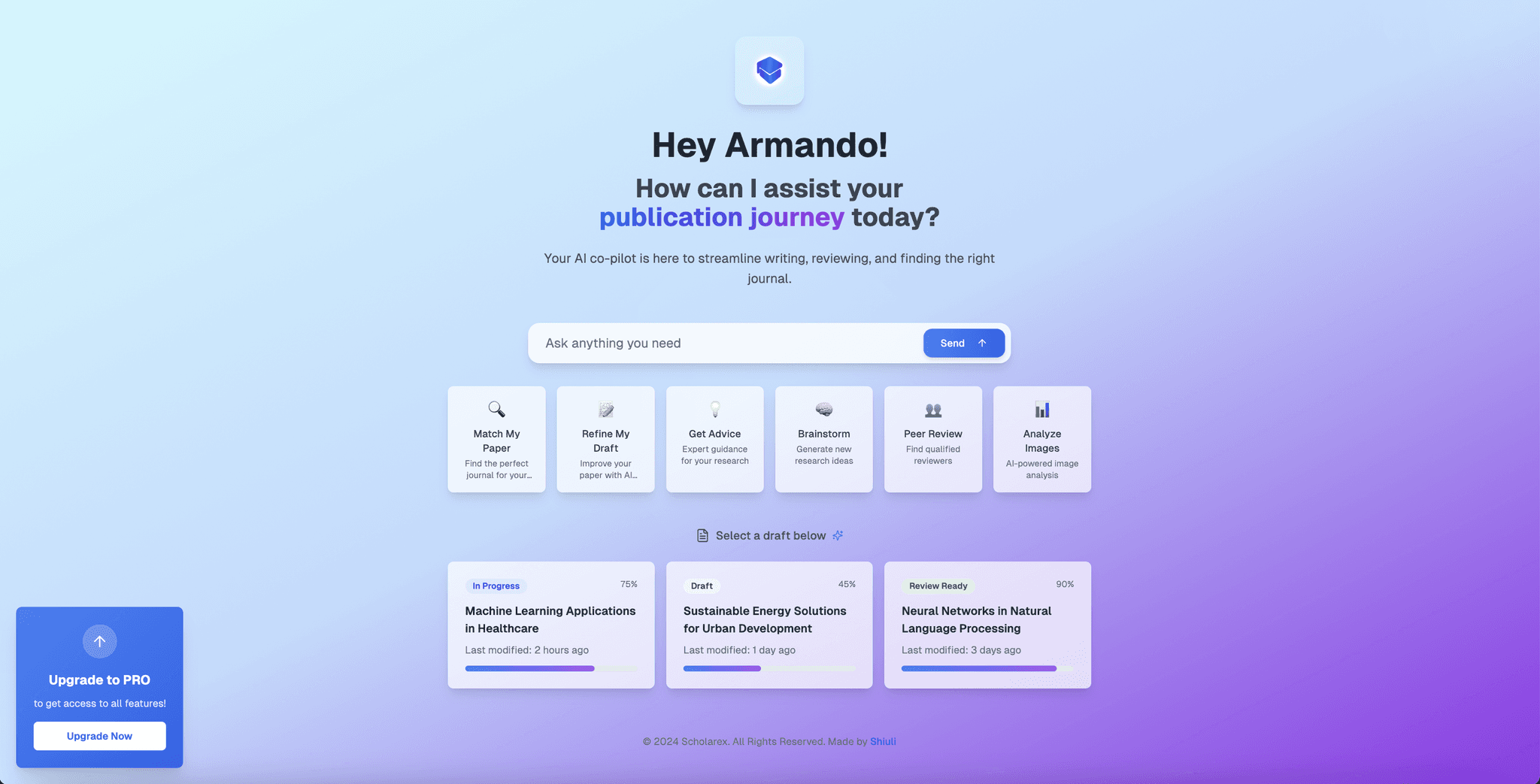
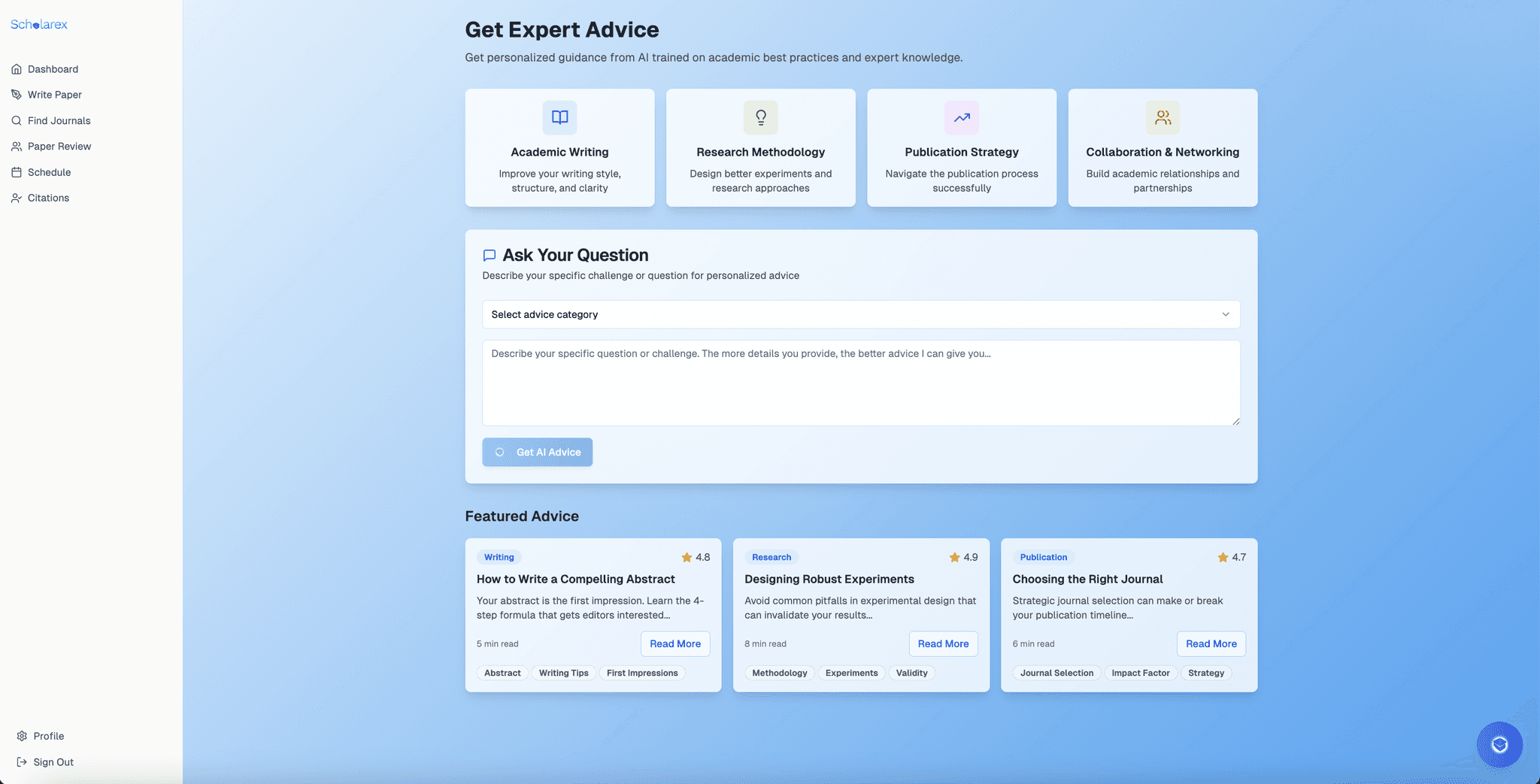
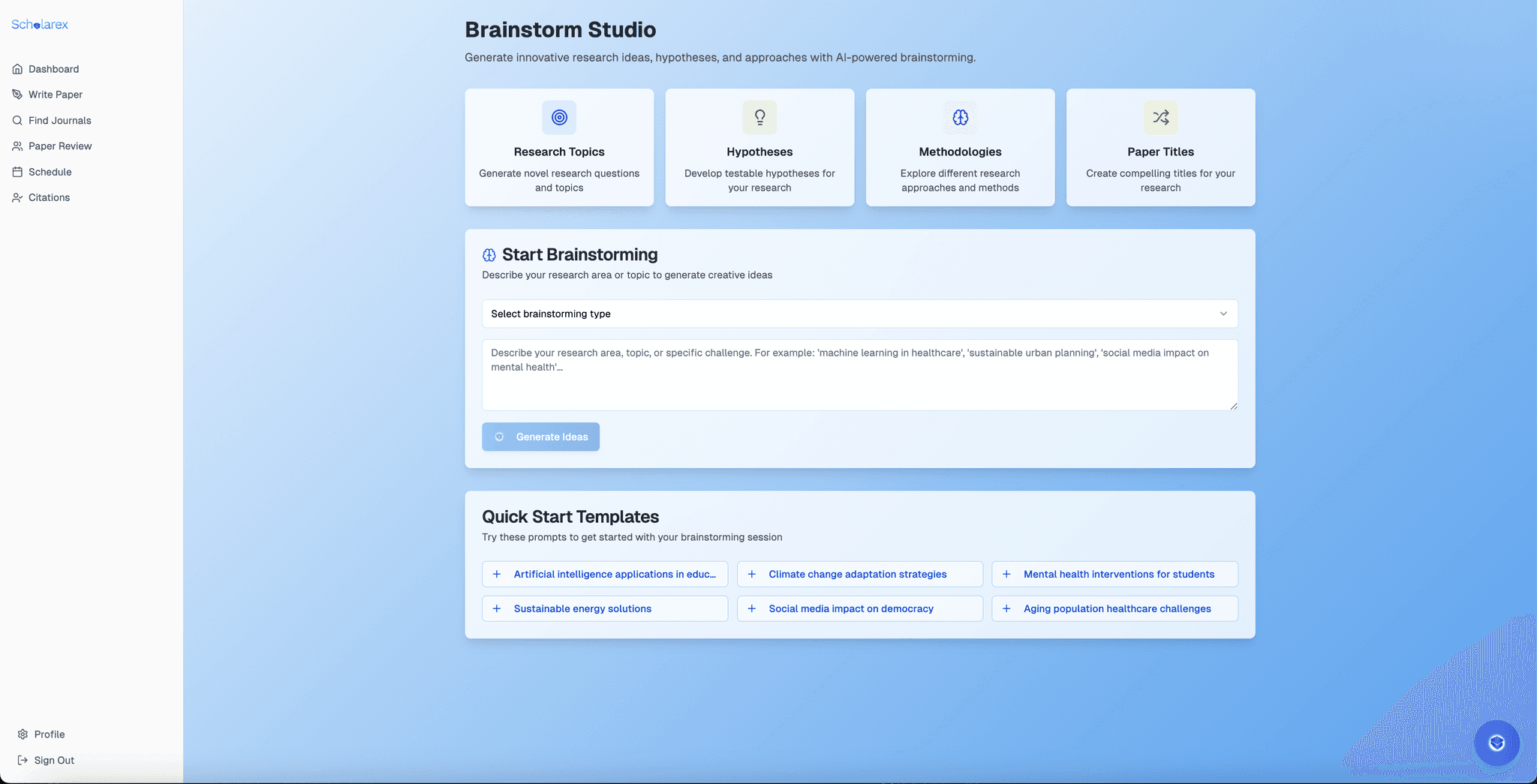
Problem
Opportunity
Process
Solution
Takeaway
🔮 What’s Next?
Reviewer Video Calls: Direct conversations with matched reviewers
Draft Versioning: Manage multiple versions of the same paper
Smart Contracts for Sharing: Permission-based document sharing
Self-Notes Section: Private researcher notes, hidden from collaborators