Notice for Mobile Visitors
This case study is designed for an enhanced viewing experience and is only available on the web version of our site. Please visit us on a desktop browser to explore the full details. Thank you! RideHERO streamlines the entire process for convenience and cost-efficiency.
Homiee AI
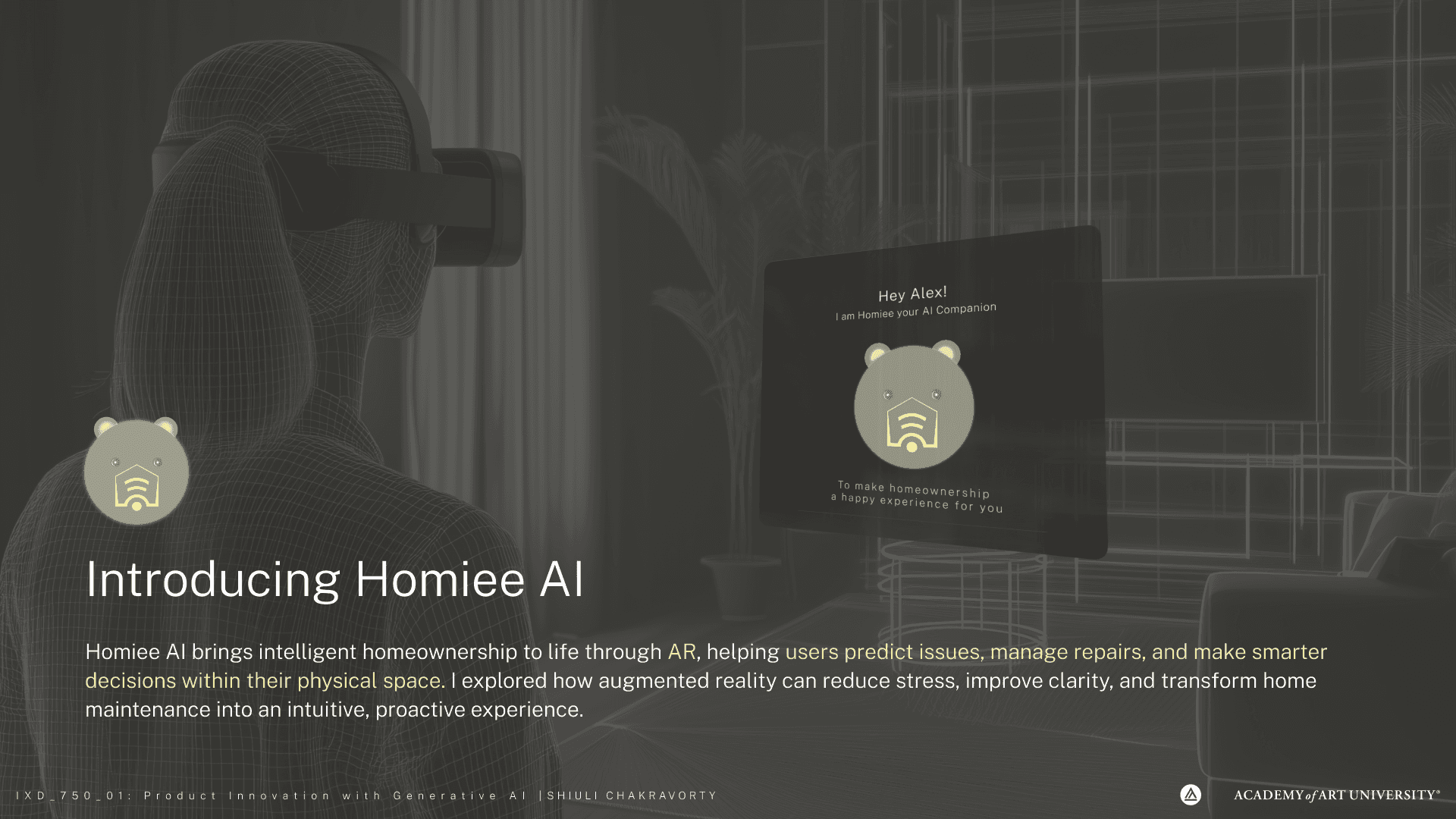
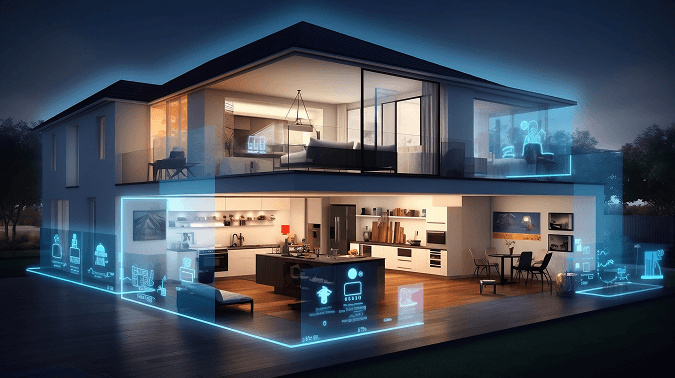
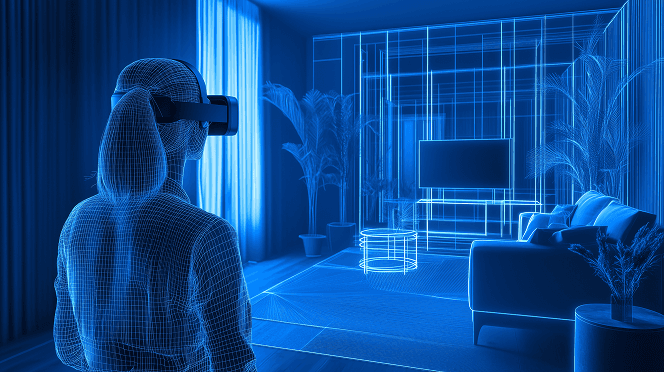
Homiee AI brings intelligent homeownership to life through AR, helping users predict issues, manage repairs, and make smarter decisions within their physical space. I explored how augmented reality can reduce stress, improve clarity, and transform home maintenance into an intuitive, proactive experience. The design research focused on homeowners’ real-world habits, emotional triggers, and their need for visibility, automation, and trust in a smart home ecosystem.
Client:
Self Project
Role:
UX Designer
Date:
Spring 2025
Duration:
5 months
🔍 Discovery of the Idea
After witnessing the stress and chaos new homeowners face with unexpected repairs and disconnected smart devices, I envisioned a system that could predict, explain, and guide users through homeownership—intelligently and calmly.
This sparked the idea for Homiee AI—a personalized home assistant that doesn’t just automate tasks but understands the context, urgency, and emotional weight of owning a home.
Existing tools like Centriq or Househappy help with static task tracking, while smart assistants like Alexa focus on automation. But none offer adaptive, AI-driven support tailored for new homeowners navigating maintenance, budgeting, and space planning.
This insight uncovered a clear gap: the need for a generative AI-powered platform that could learn from a home’s condition, anticipate issues before they escalate, and provide confident, guided next steps—especially for first-time buyers unfamiliar with these challenges.
With Homiee AI, the goal was simple: turn homeownership from a source of anxiety into a system of support.
After witnessing the stress and chaos new homeowners face with unexpected repairs and disconnected smart devices, I envisioned a system that could predict, explain, and guide users through homeownership—intelligently and calmly.
This sparked the idea for Homiee AI—a personalized home assistant that doesn’t just automate tasks but understands the context, urgency, and emotional weight of owning a home. Existing tools like Centriq or Househappy help with static task tracking, while smart assistants like Alexa focus on automation. But none offer adaptive, AI-driven support tailored for new homeowners navigating maintenance, budgeting, and space planning.
This insight uncovered a clear gap: the need for a generative AI-powered platform that could learn from a home’s condition, anticipate issues before they escalate, and provide confident, guided next steps—especially for first-time buyers unfamiliar with these challenges. With Homiee AI, the goal was simple: turn homeownership from a source of anxiety into a system of support.
📊 Research & Insights
Homeownership Demographics:
A majority of homeowners have owned their homes for over 5 years, followed by those who have owned for 1-3 years, 3-5 years, and less than 1 year.
Core Challenges:
Home maintenance is the top challenge, followed by issues with complex home systems like HVAC, plumbing, and electrical, budgeting for unexpected expenses, and interior design and space planning.

“Unexpected repairs throw homeowners off.
There’s no central system to predict or respond efficiently.”
“Manual tracking leads to surprises
and missed financial planning opportunities.”
“Users juggle too many systems. They crave one intelligent hub.”
“Unexpected repairs throw homeowners off.
There’s no central system to predict or respond efficiently.”
“Manual tracking leads to surprises
and missed financial planning opportunities.”
“Users juggle too many systems. They crave one intelligent hub.”
40.9% rely on professional services, while only 6.8% have embraced smart home assistants or mobile apps.
Budgeting Behavior:
A staggering 66.7% of homeowners still manually track expenses using spreadsheets and sticky notes.
Our qualitative feedback sessions revealed that users are not just looking for automation but crave a holistic understanding of their home’s lifecycle. This includes emotional reassurance and proactive planning tips that resonate with their everyday struggles.
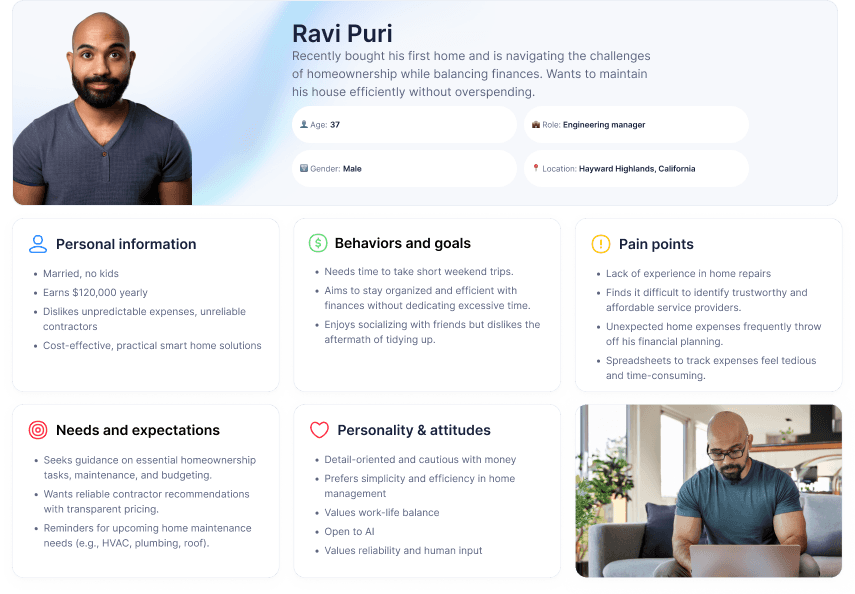
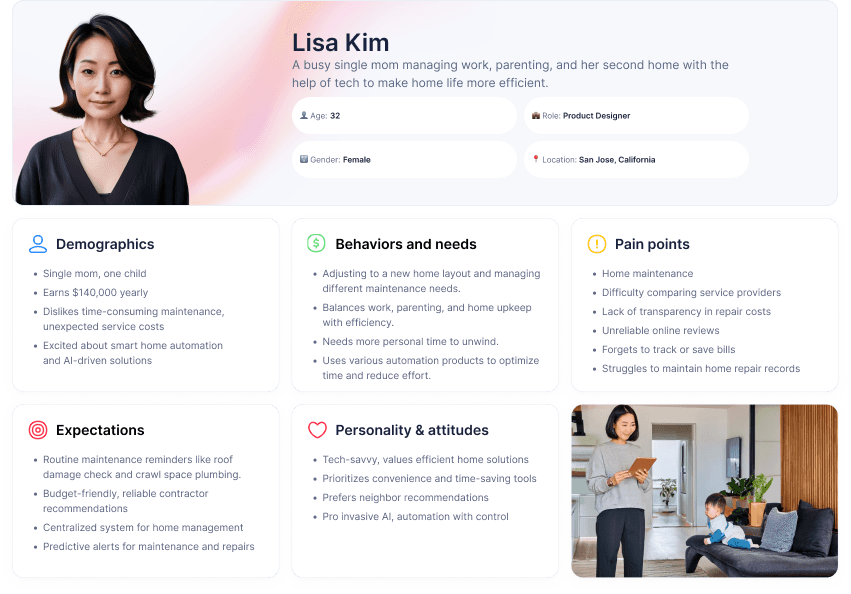
👤 Persona
💡 Jobs To Be Done & HMW Questions
JTBD: Help the homeowners maintain their homes effortlessly and manage costs proactively.
HMWs:
HMW predict and prevent costly home repairs before they escalate?
HMW simplify maintenance without relying on memory?
HMW make homeownership feel empowering instead of overwhelming?
🔄 Task Flows
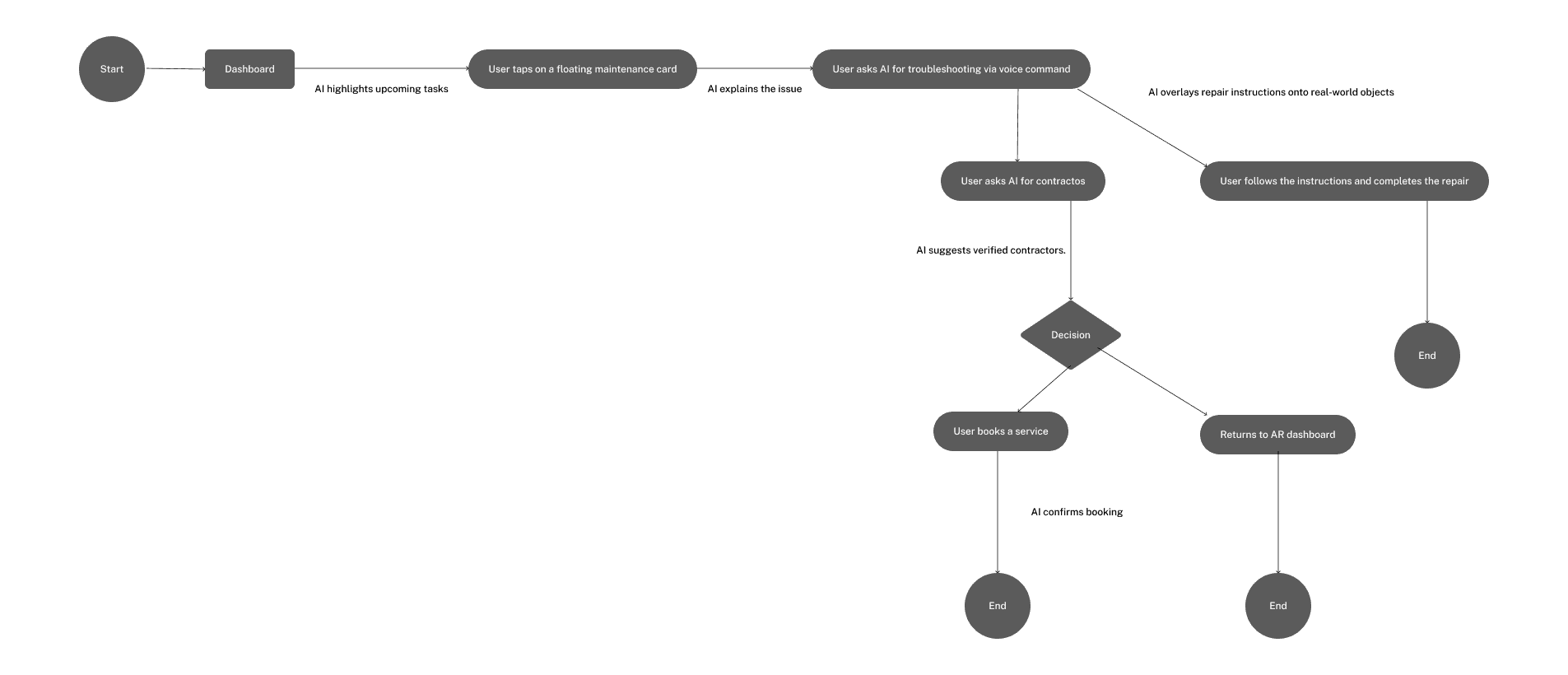

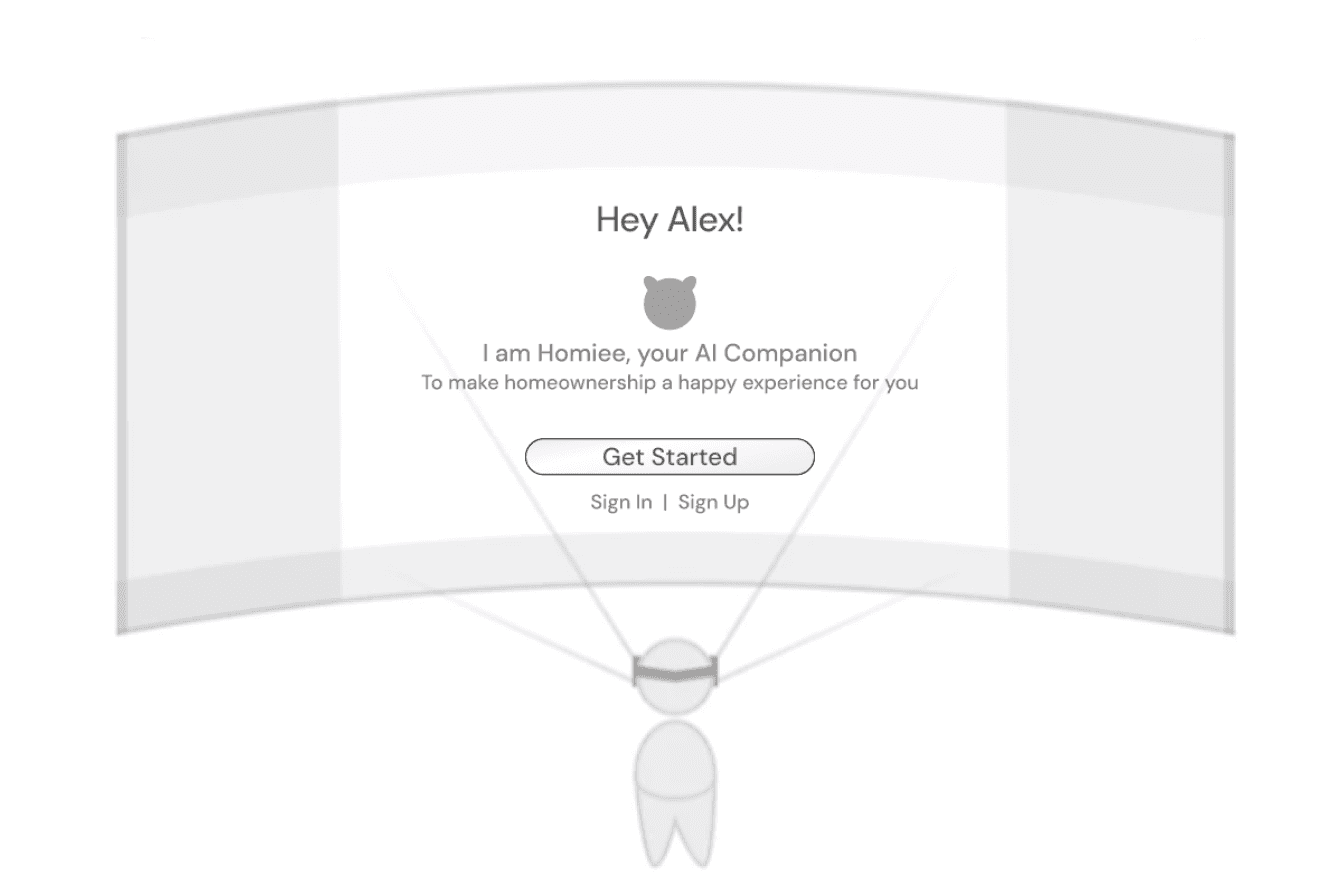
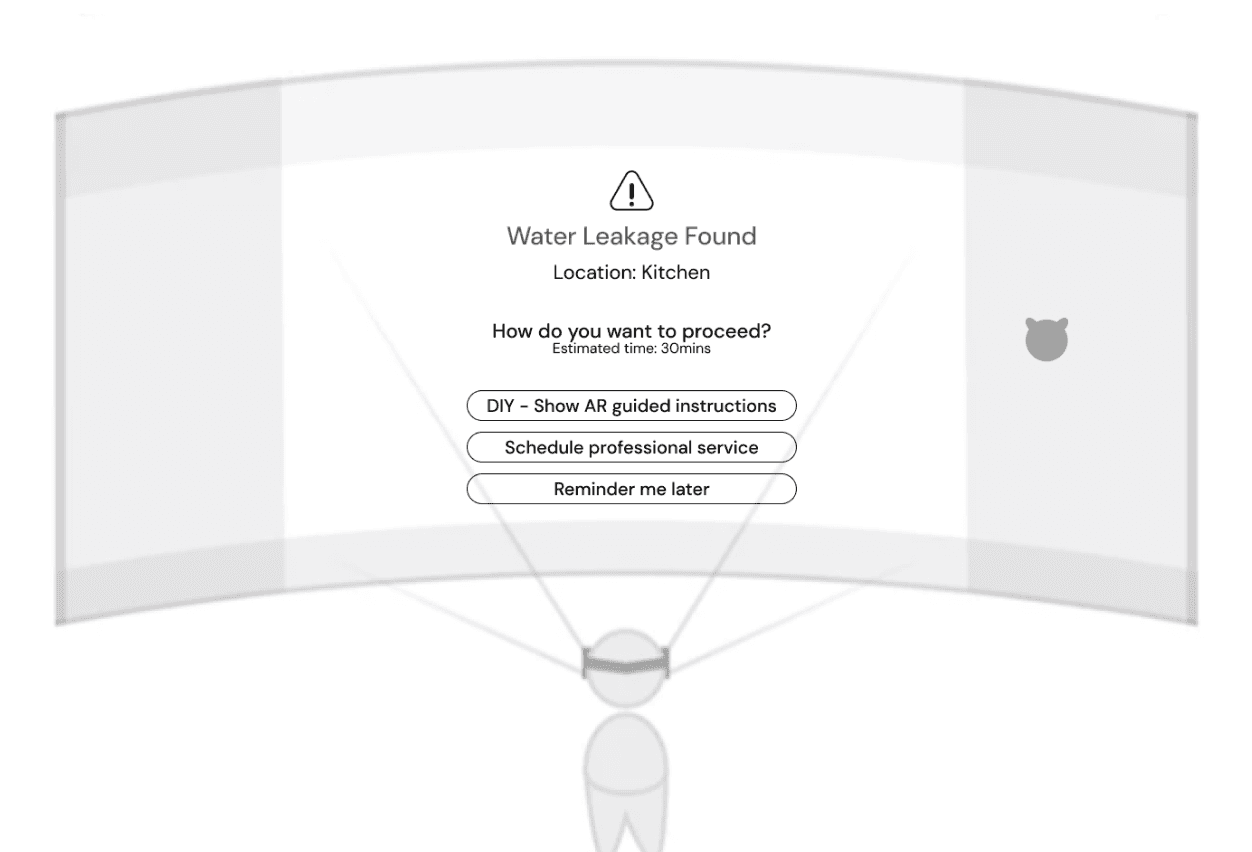
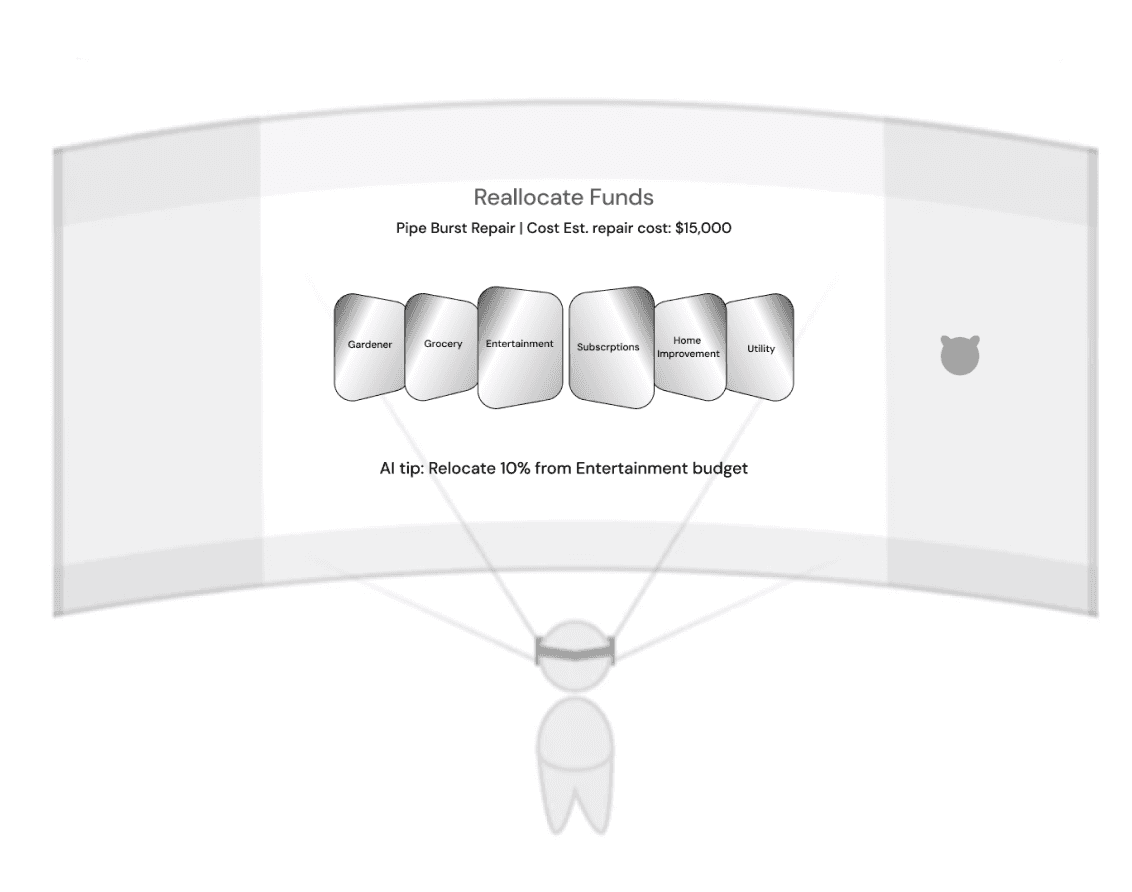
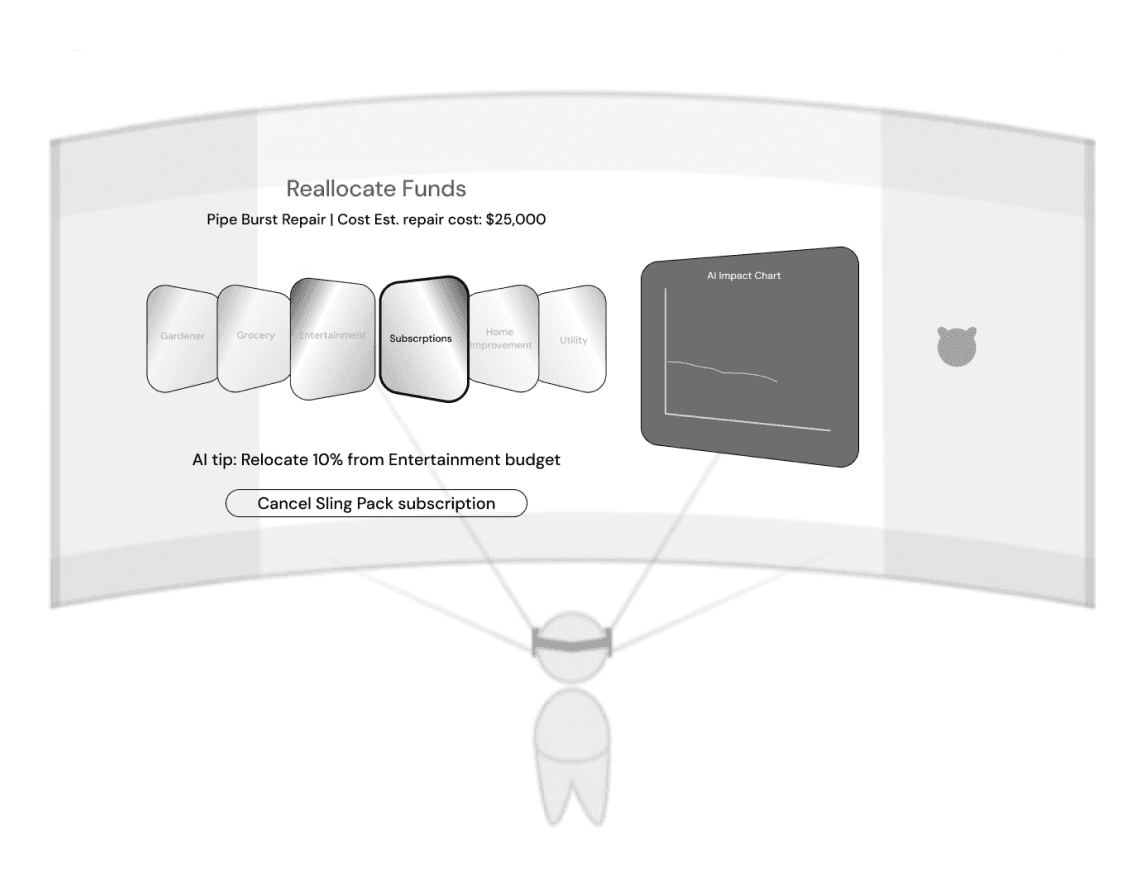
📐 Early wireframes mapped user journeys and simplified the
decision-making points, emphasizing clarity and context in each step.
📐 Early wireframes mapped user journeys and simplified the decision-making points, emphasizing clarity and context in each step.
Welcome Dashboard and Maintenance Alert
Welcome Dashboard and Maintenance Alert
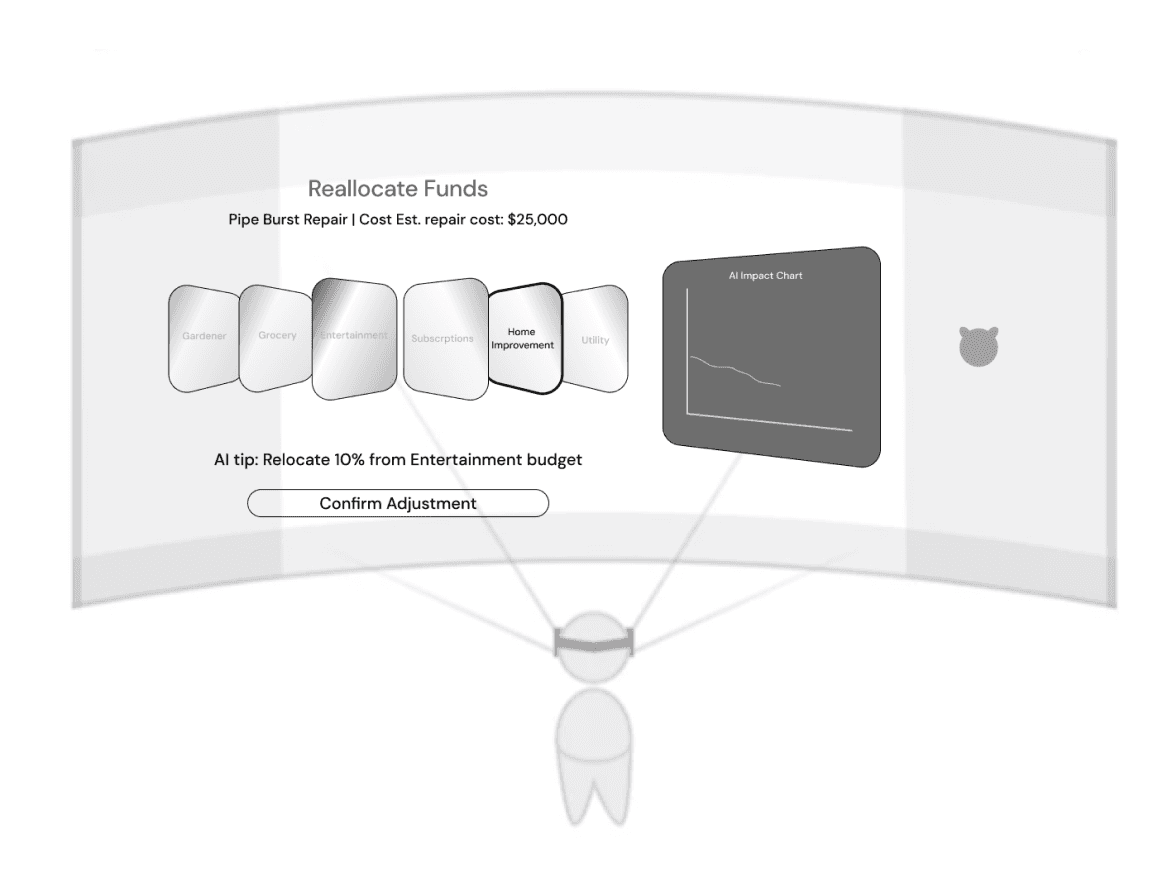
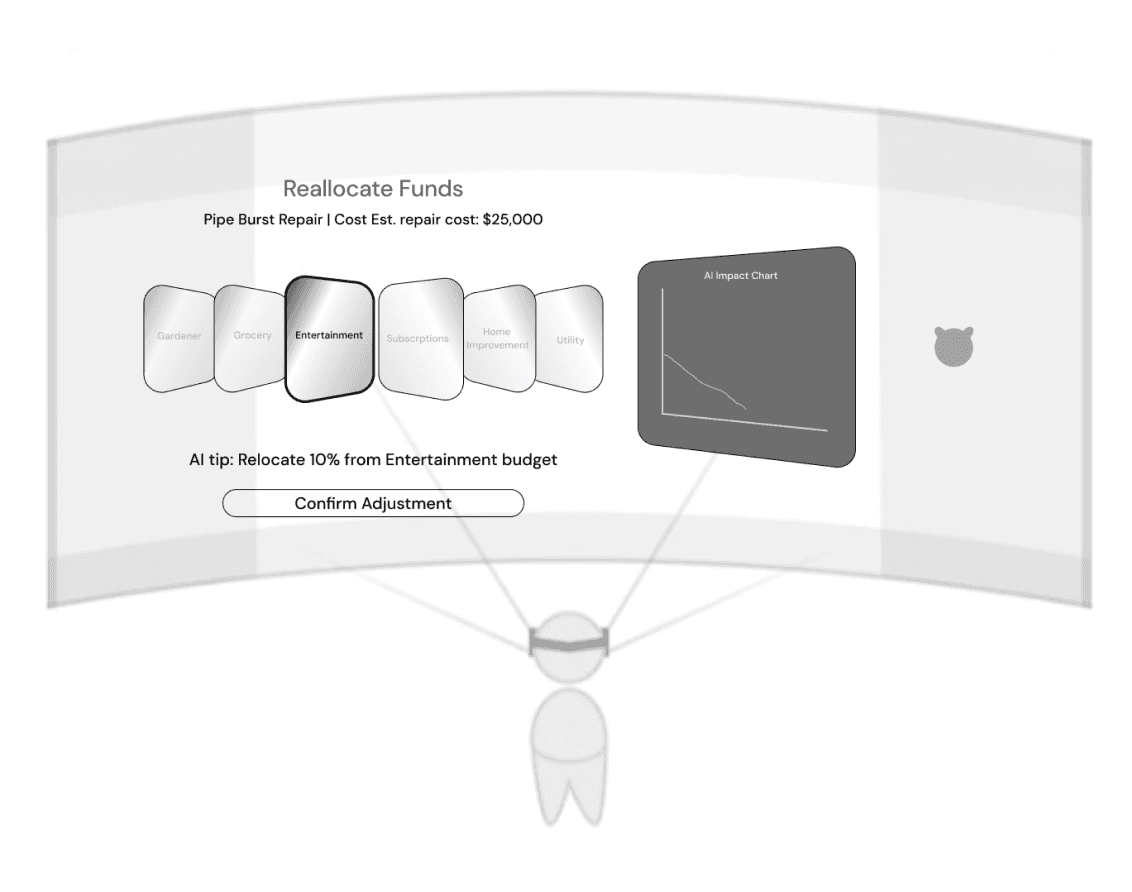
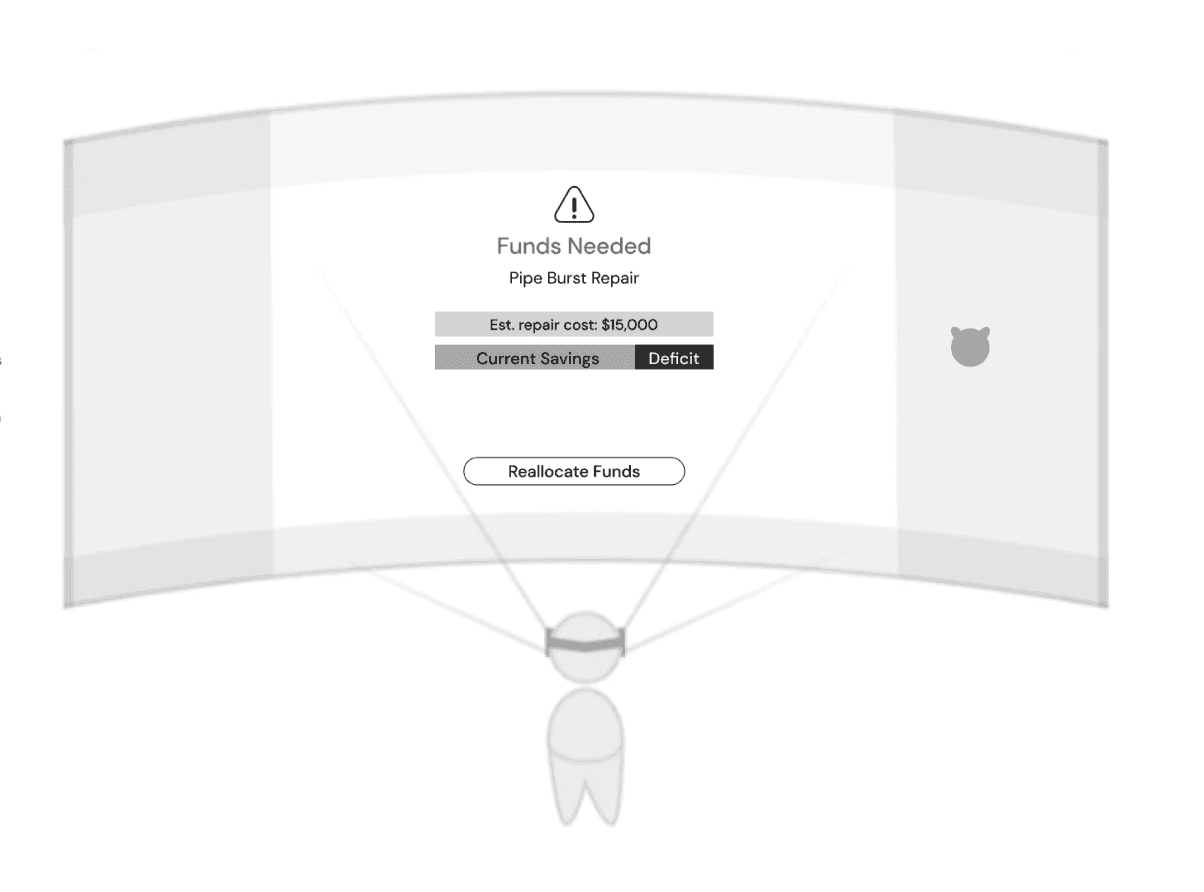
Emergency Fund and Financial Planning Wireframe
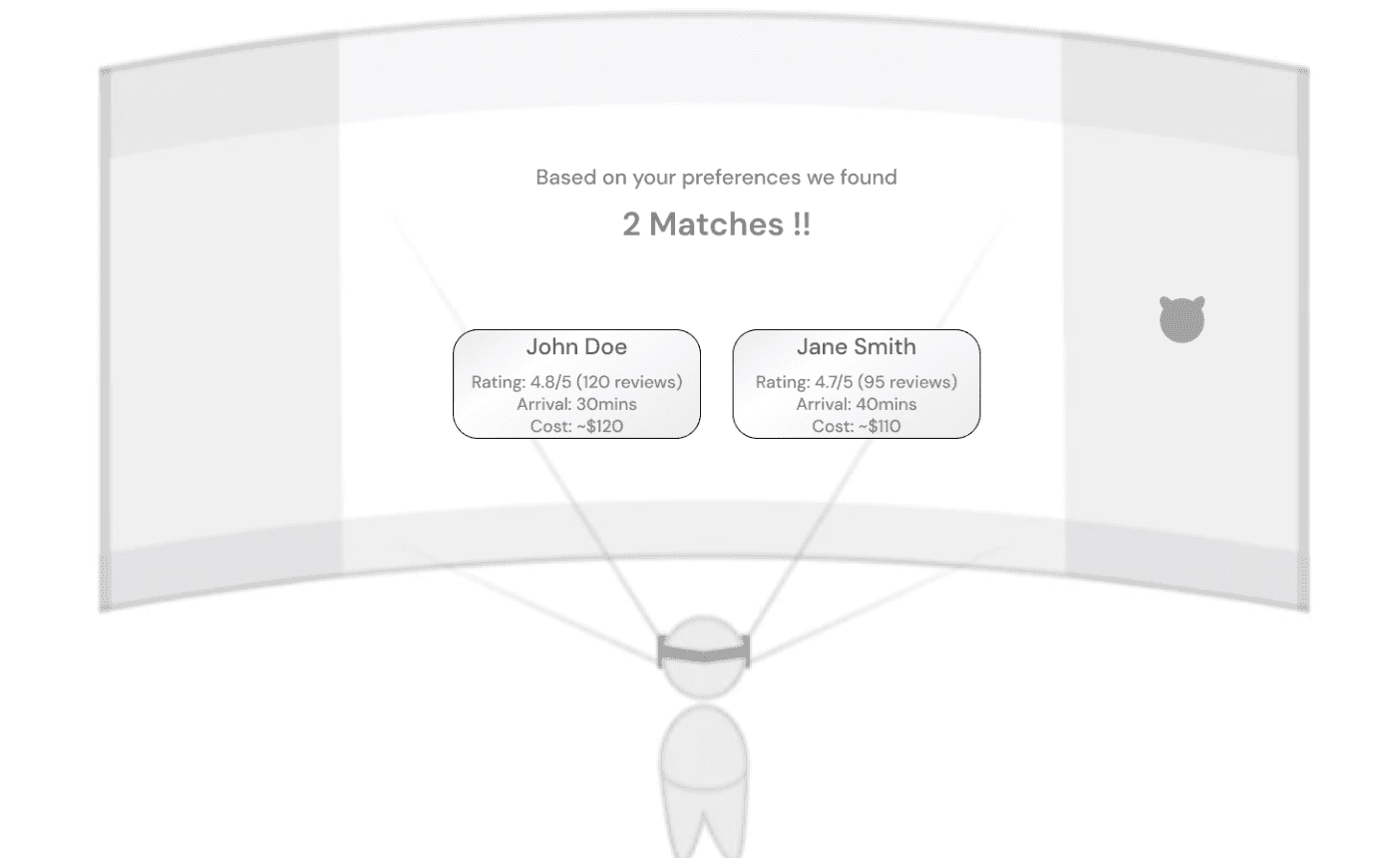

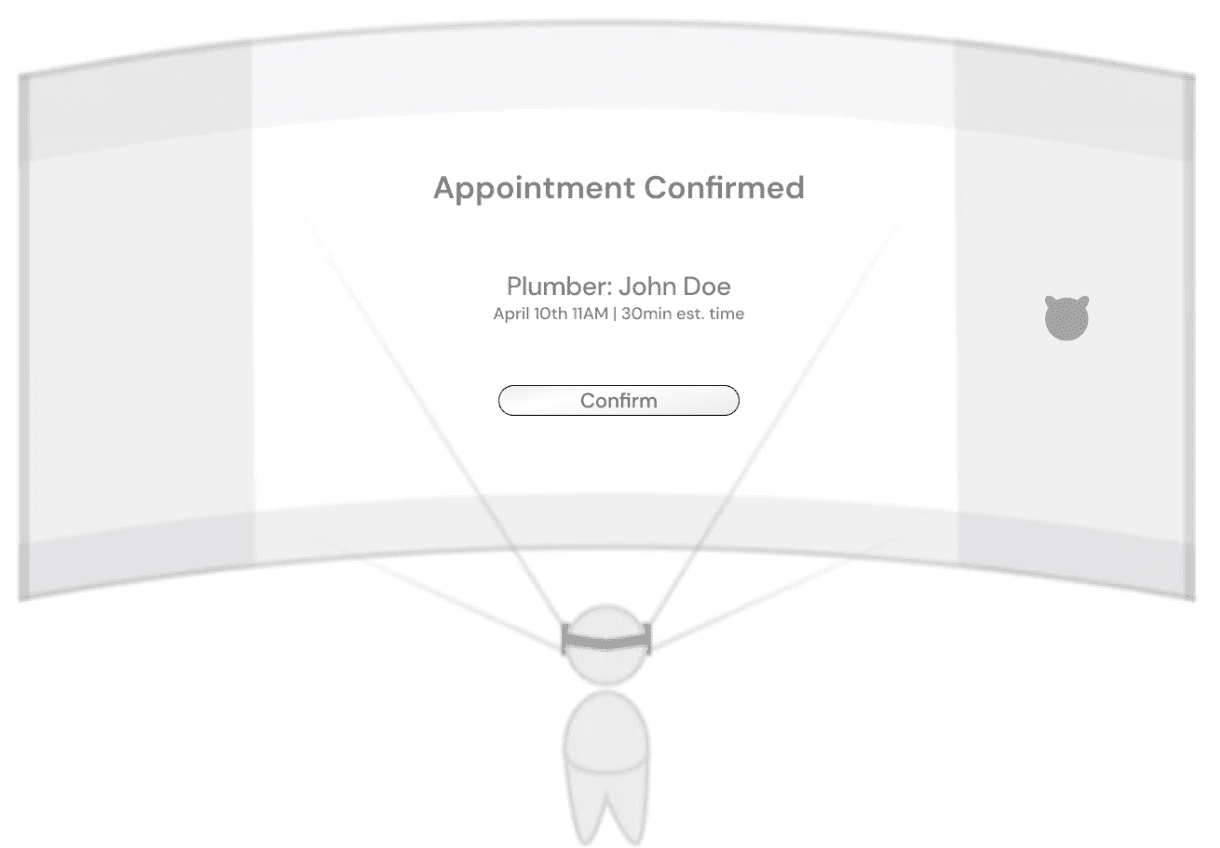
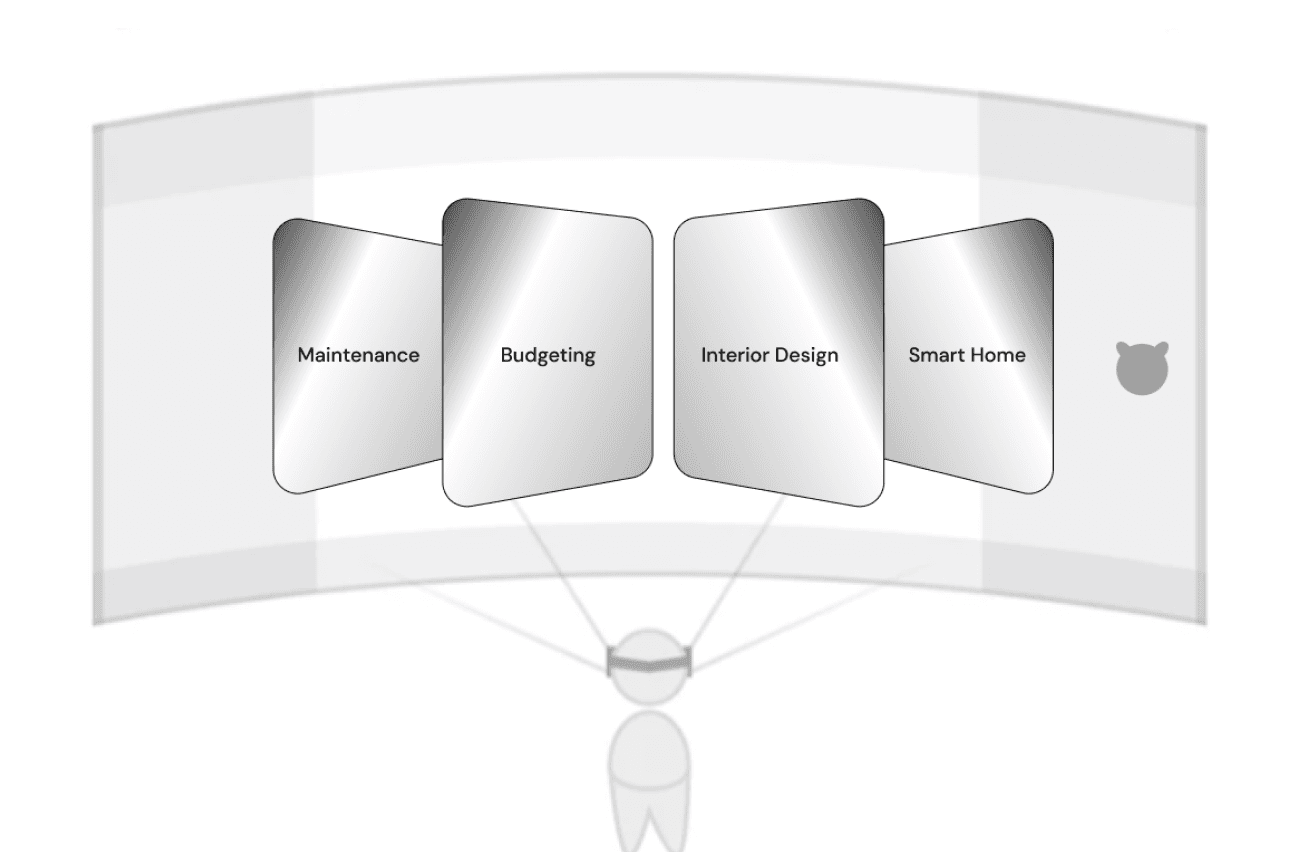
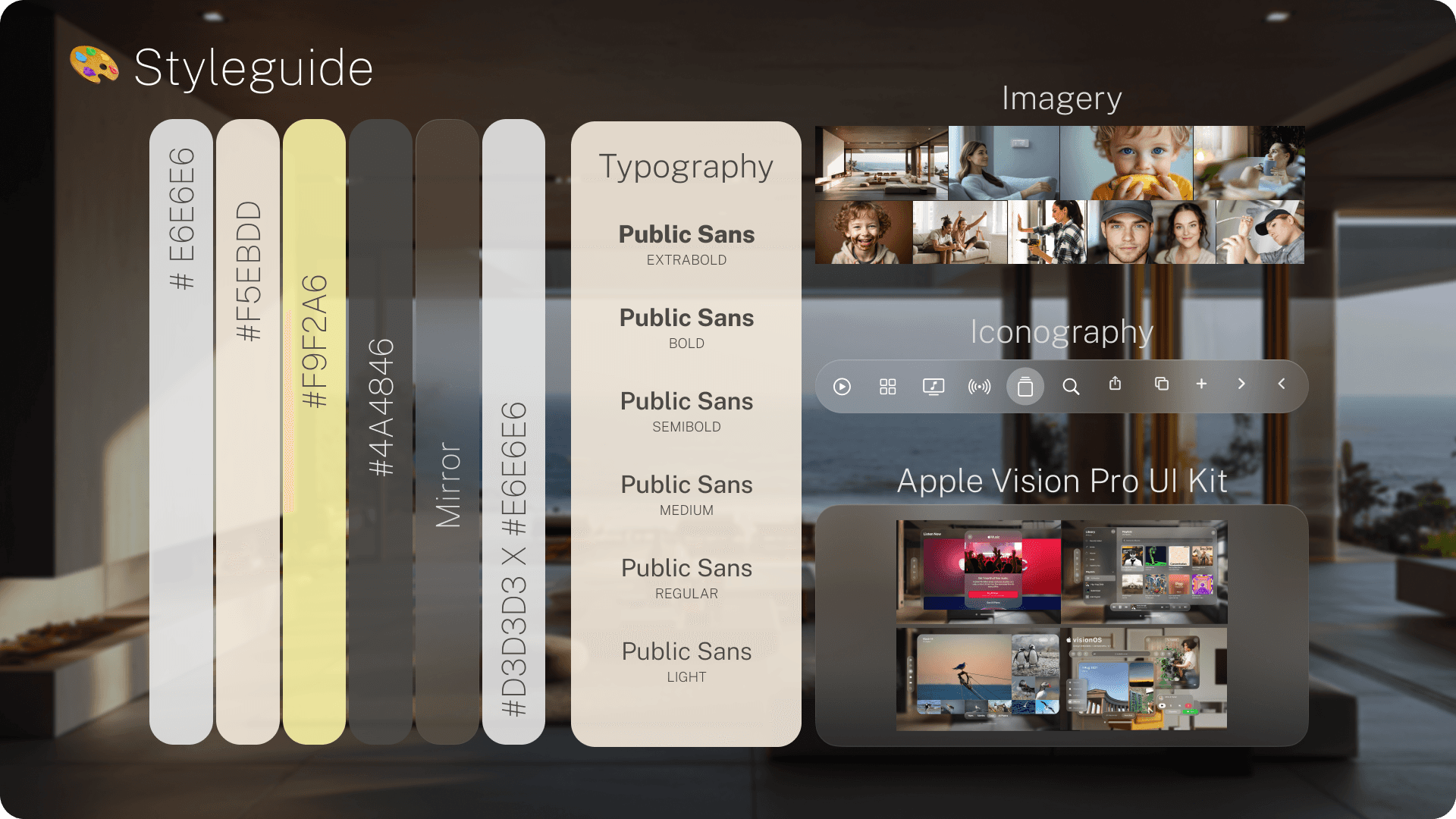
🎨 Style Guide
Early wireframes mapped user journeys and simplified decision-making points, emphasizing clarity and context in each step.
🖼️ I crafted aesthetic high fedility interactive interface for AR/VR
Welcome Dashboard and Maintenance Alert
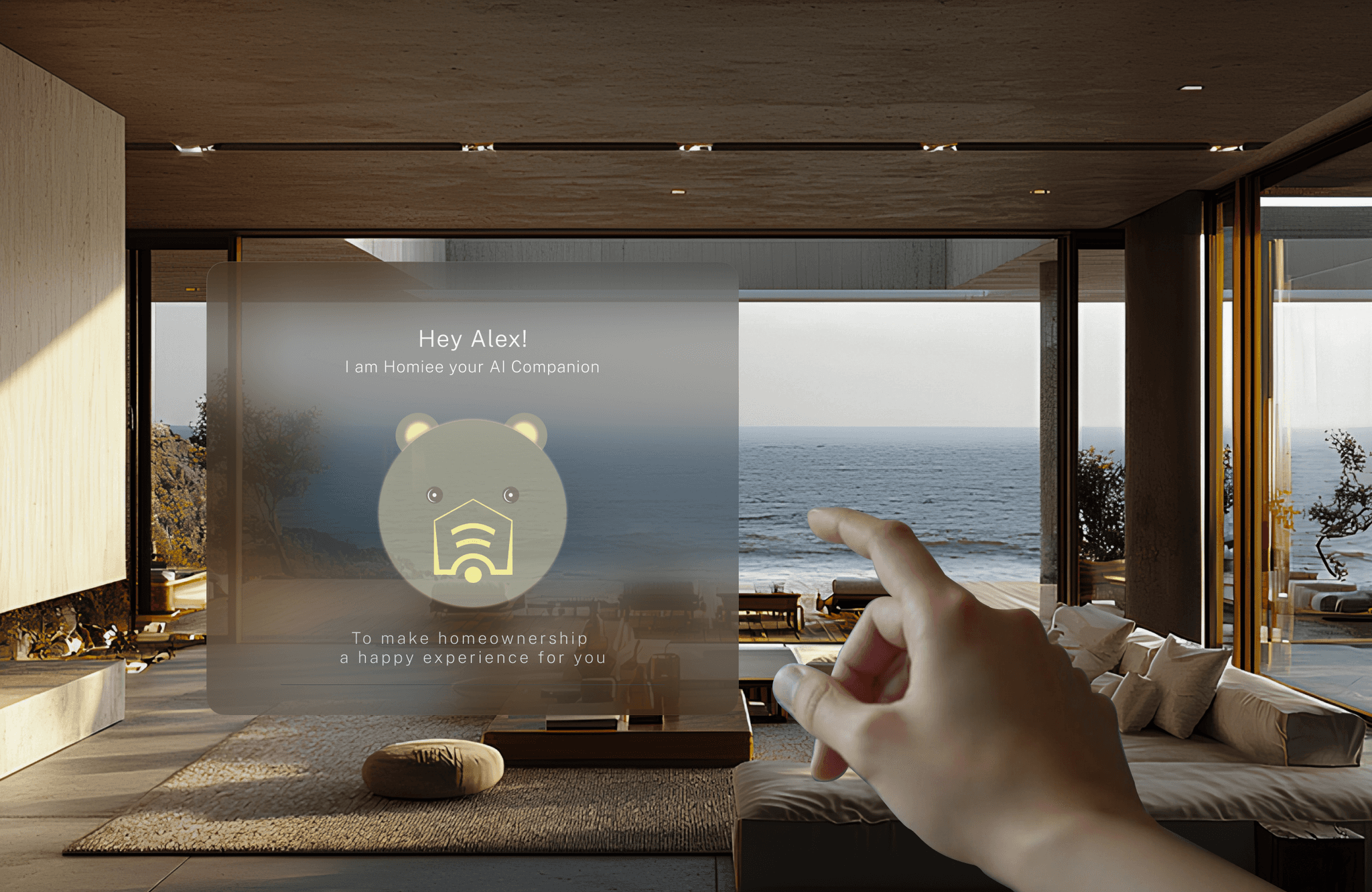
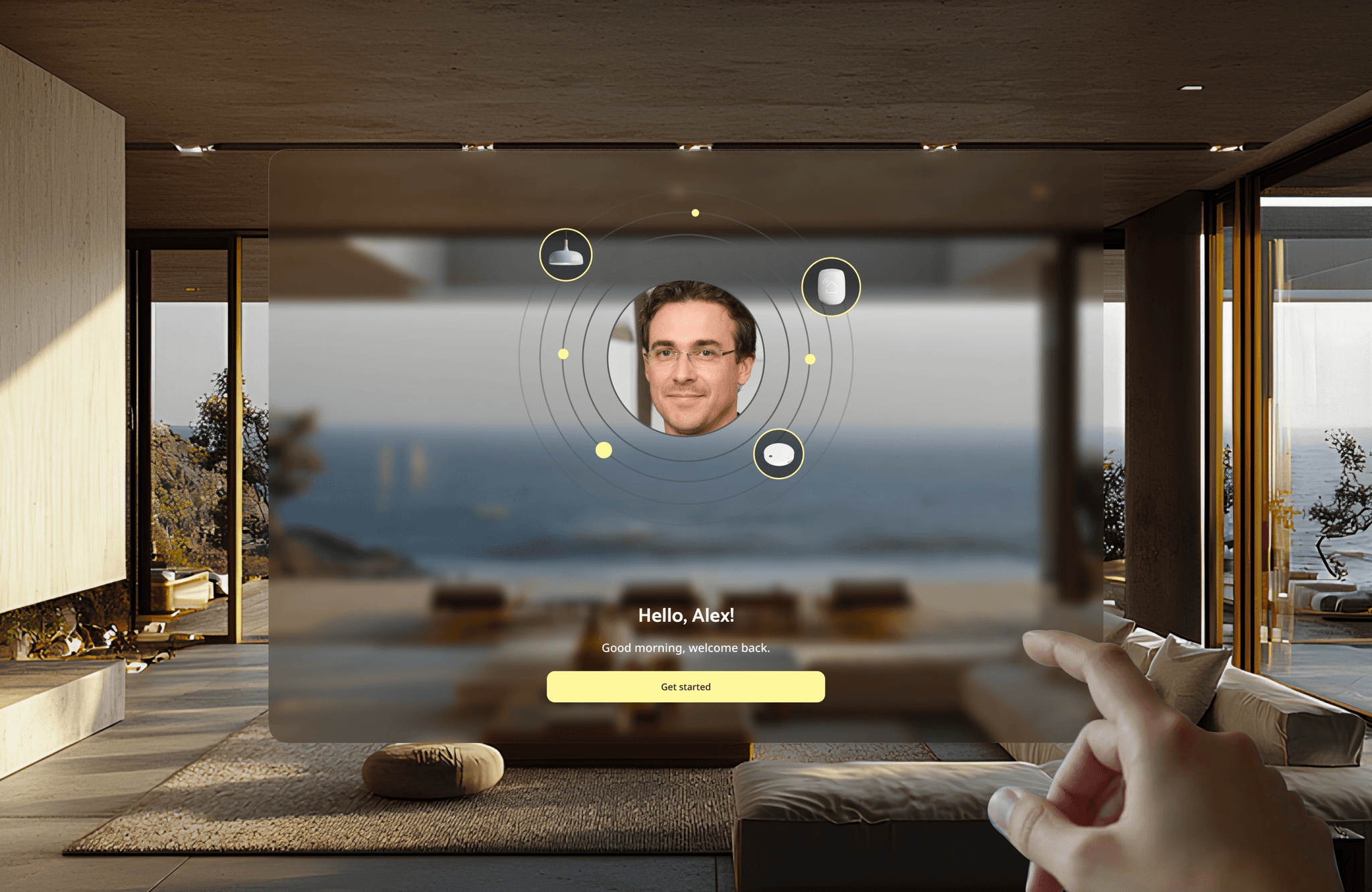
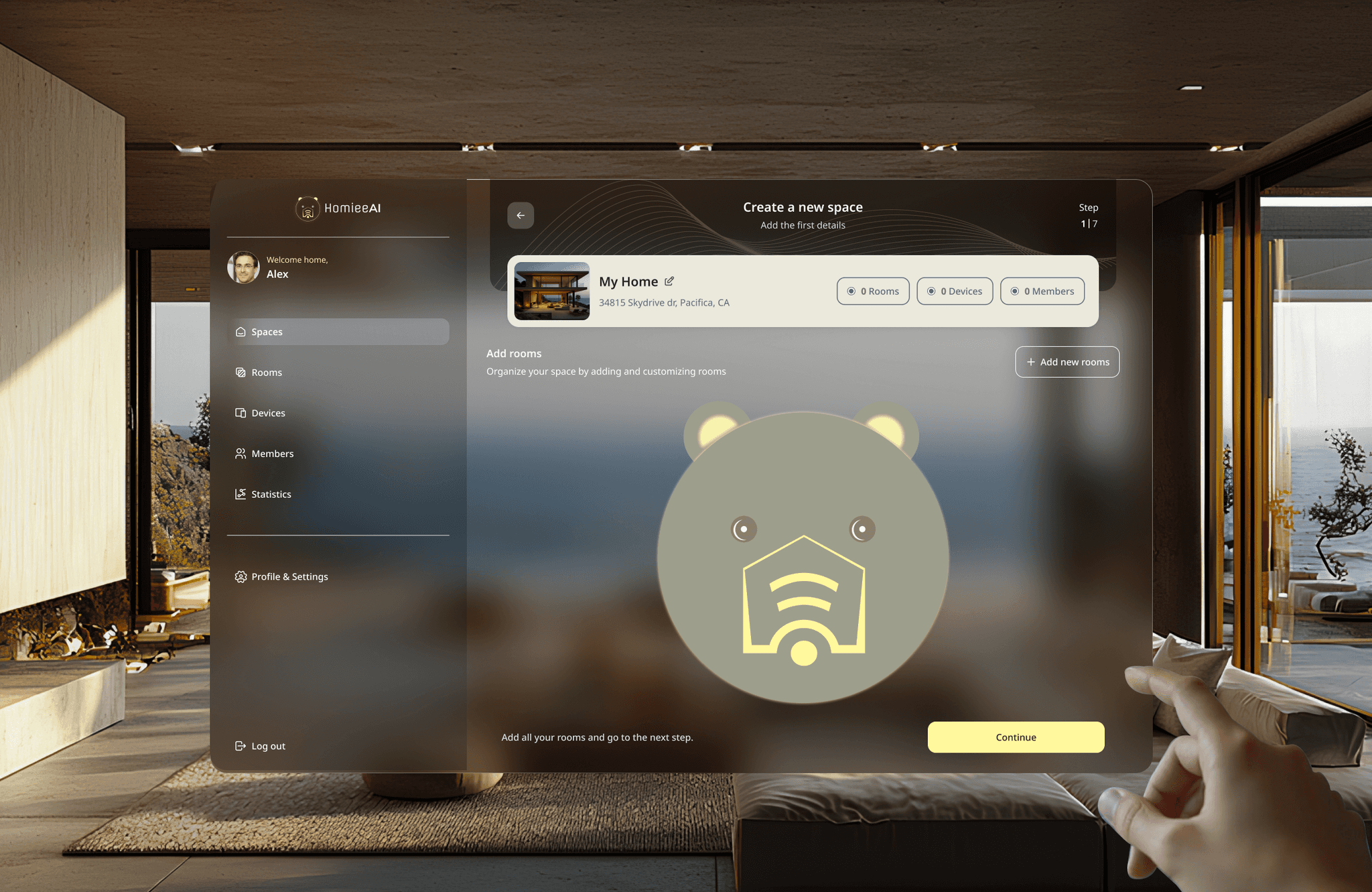
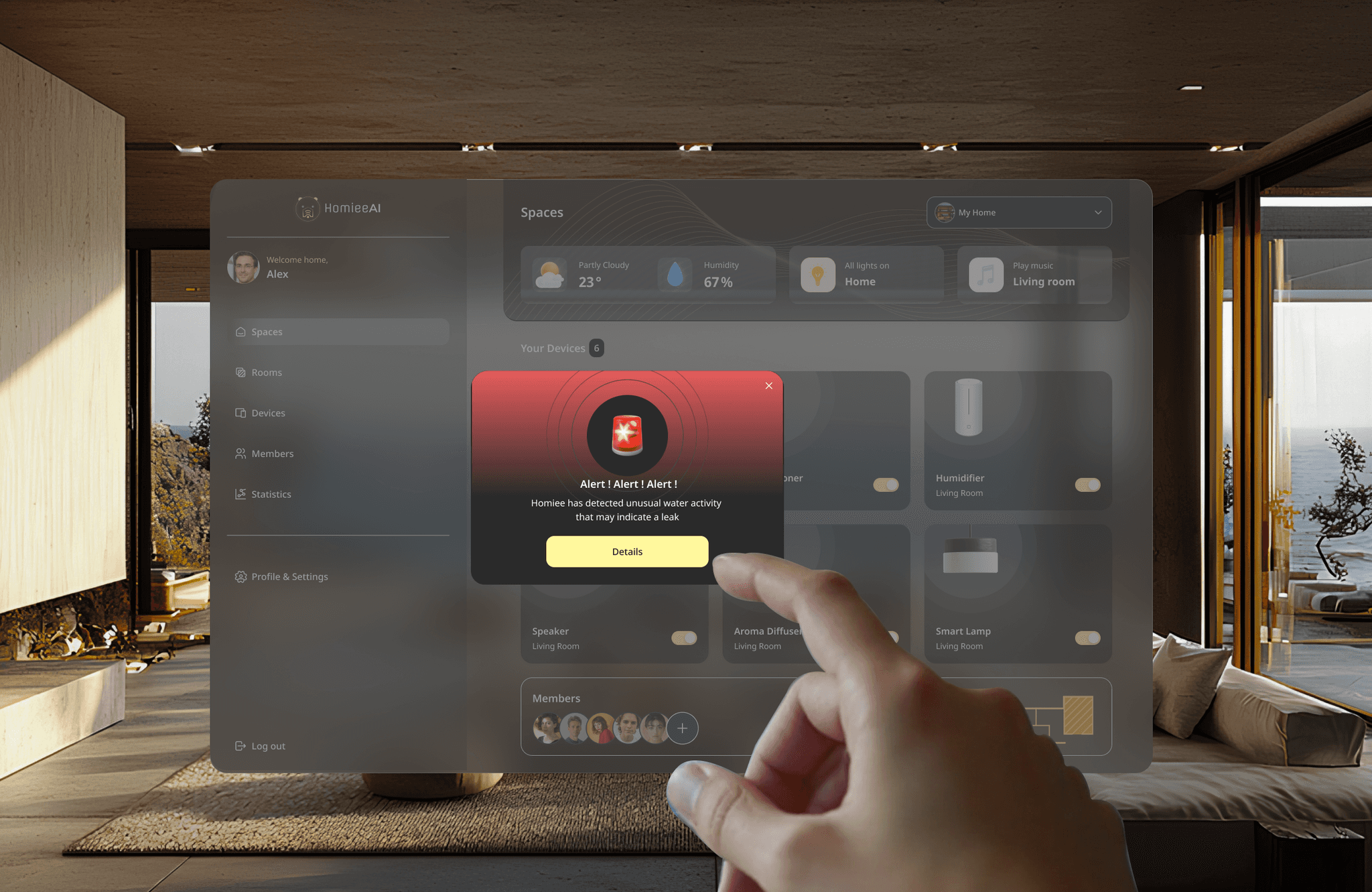
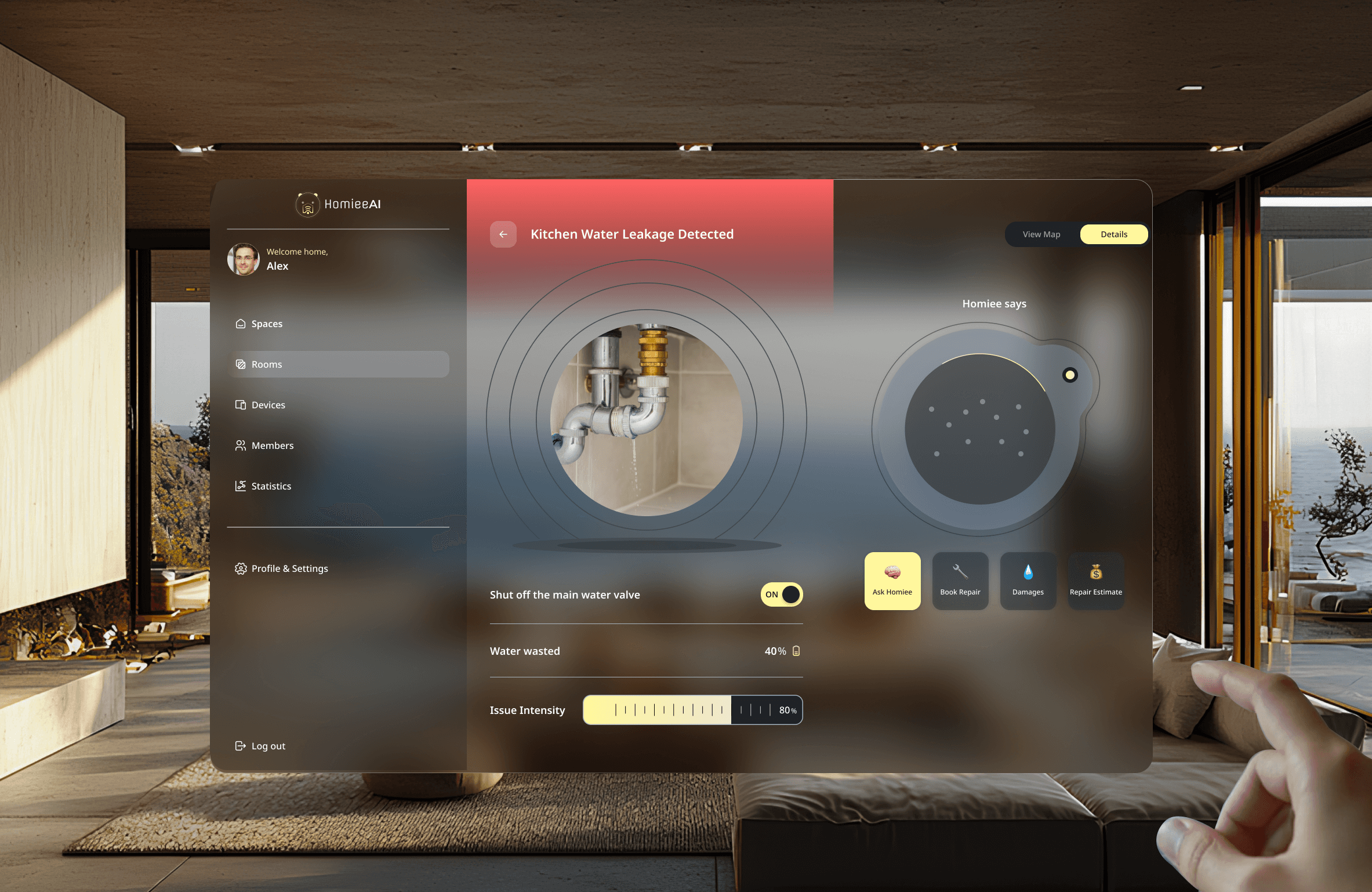
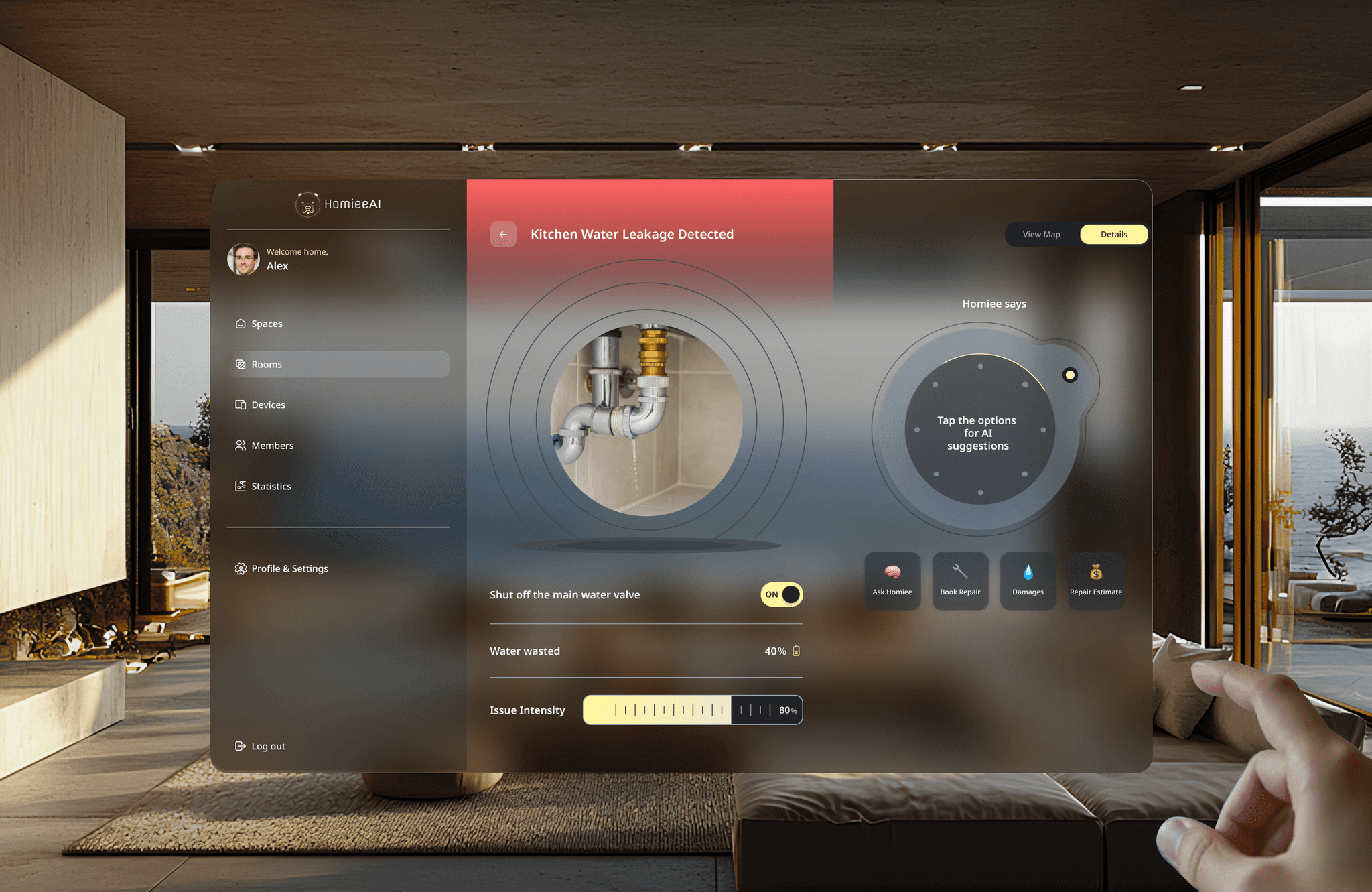
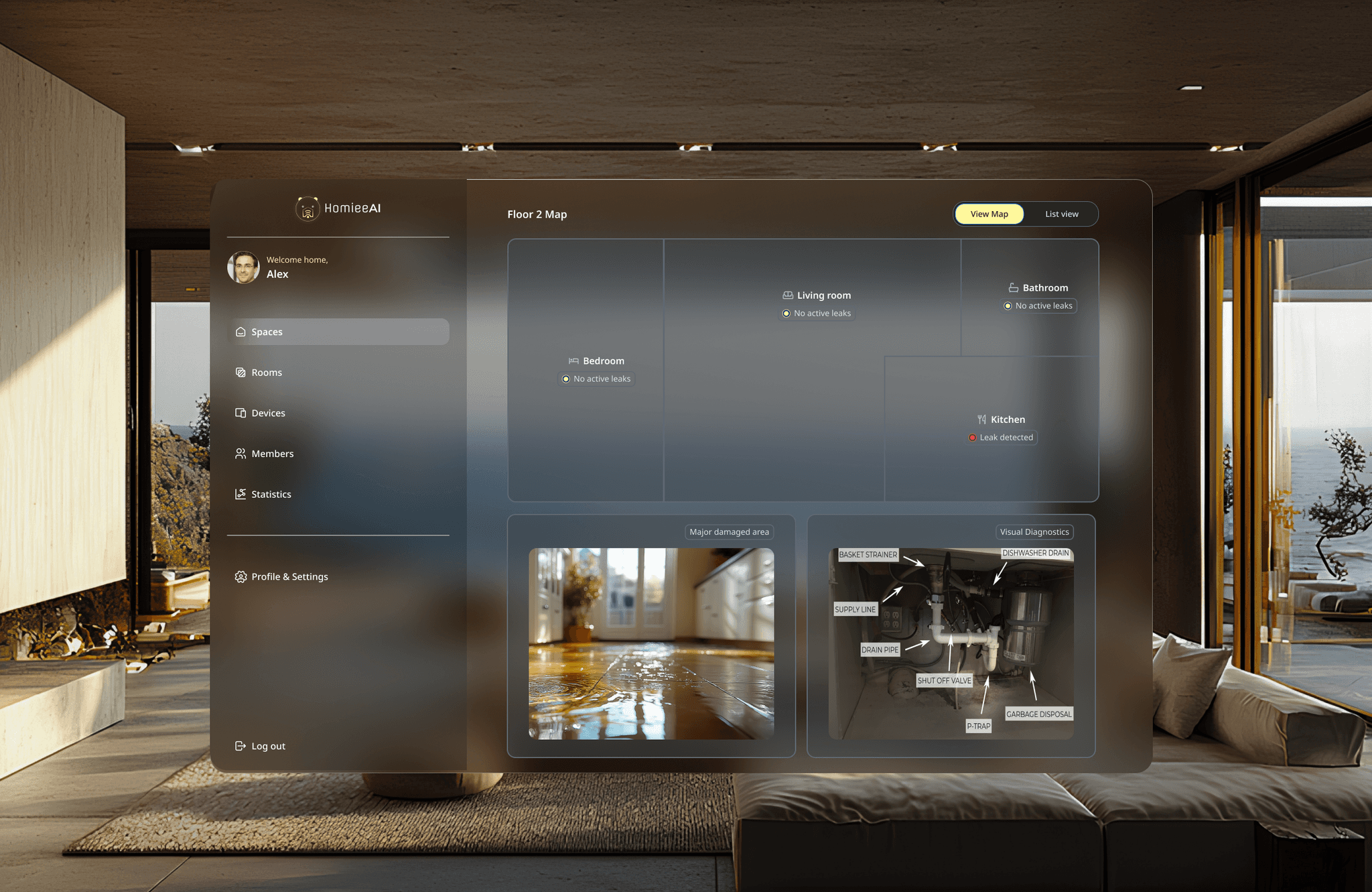
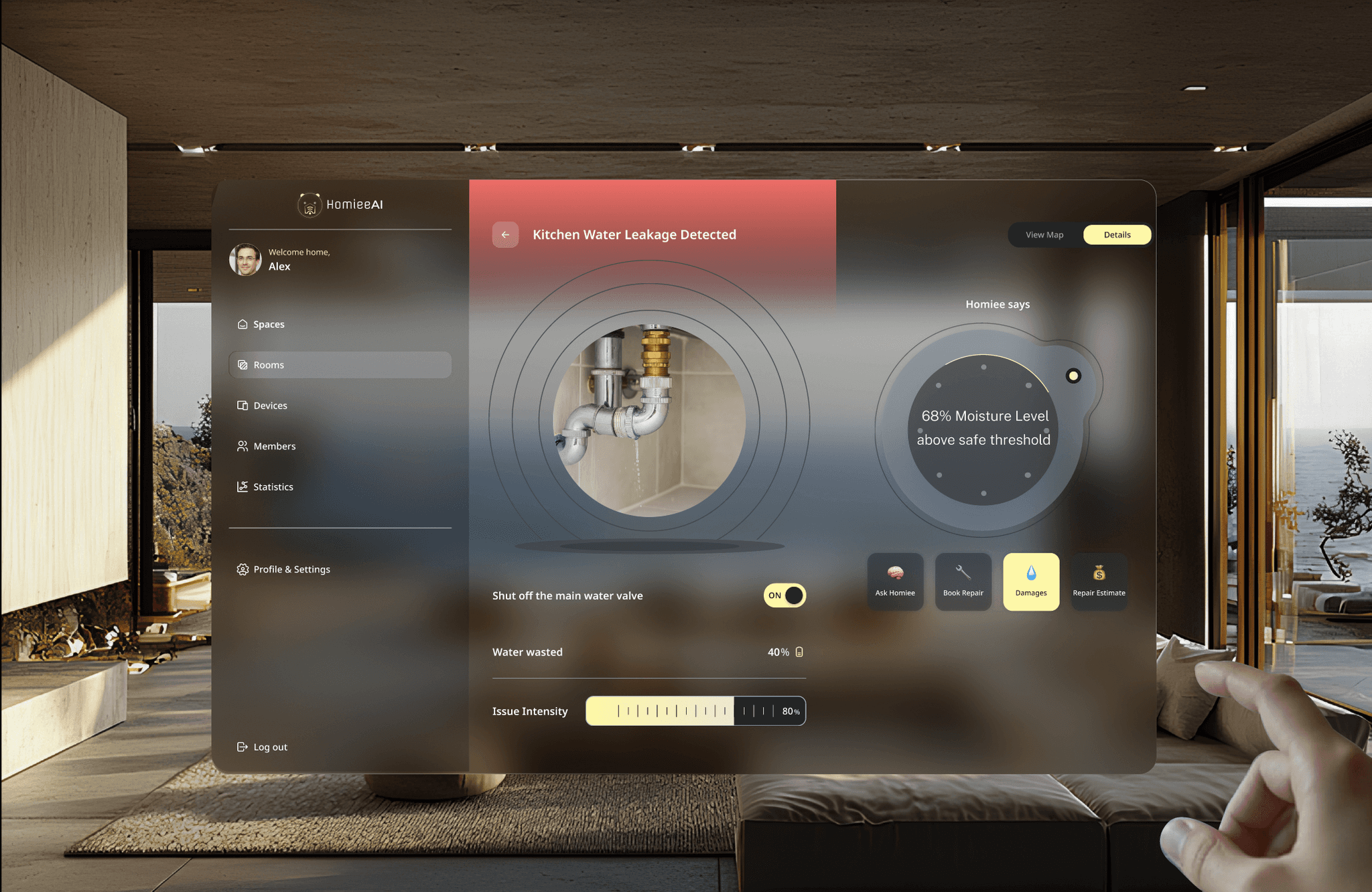
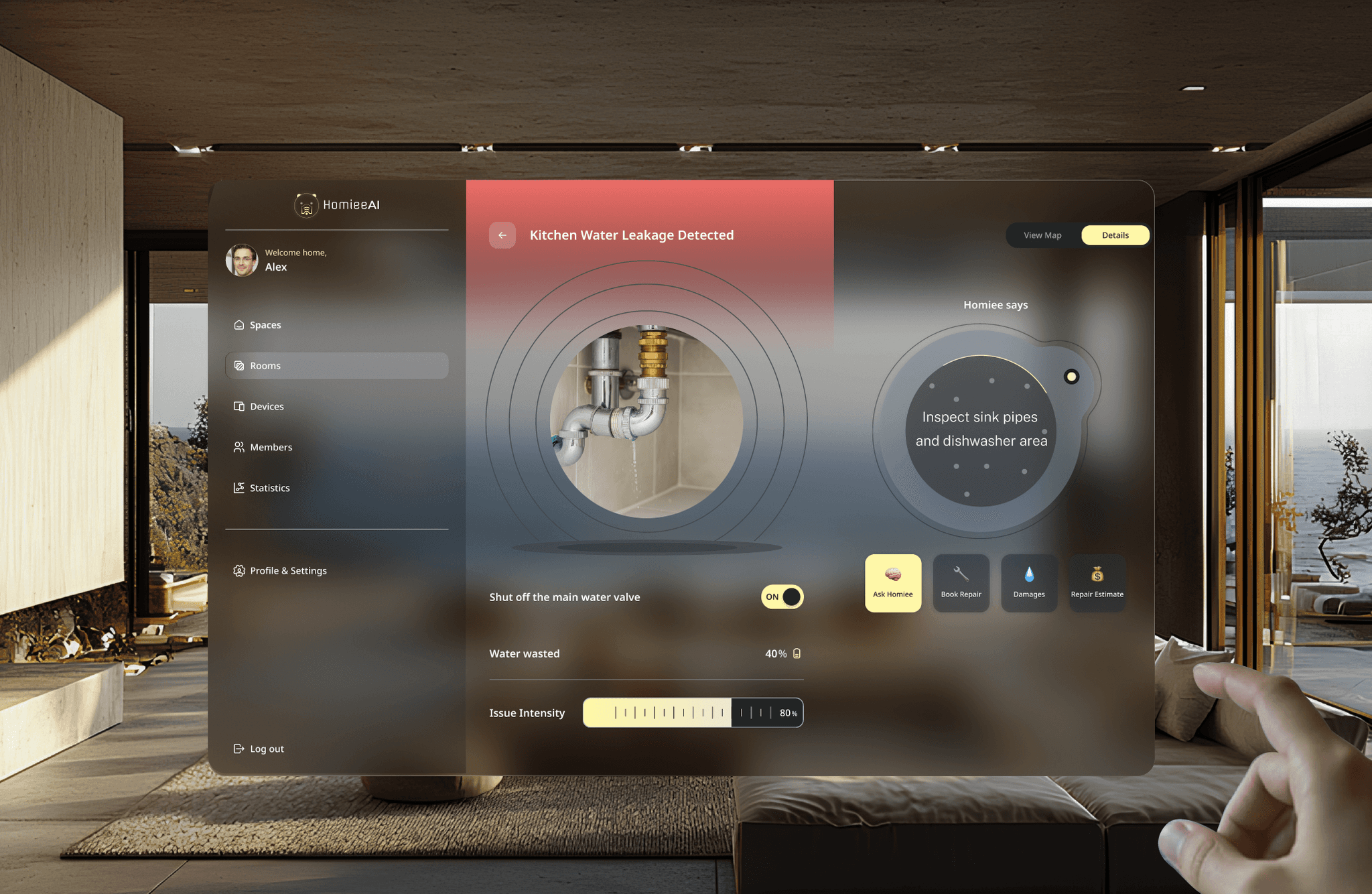
Water Leakage Alert Details and Map View
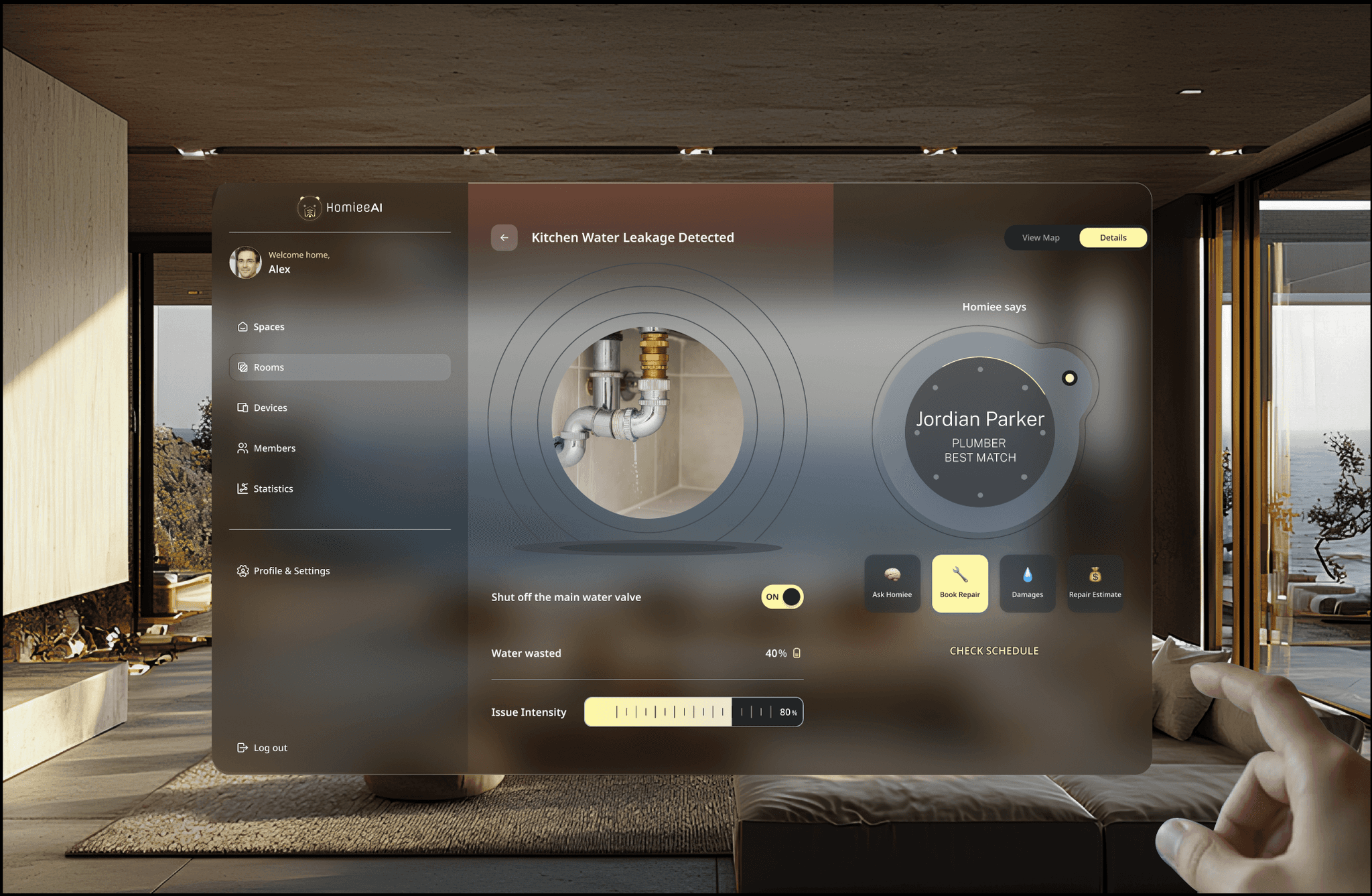
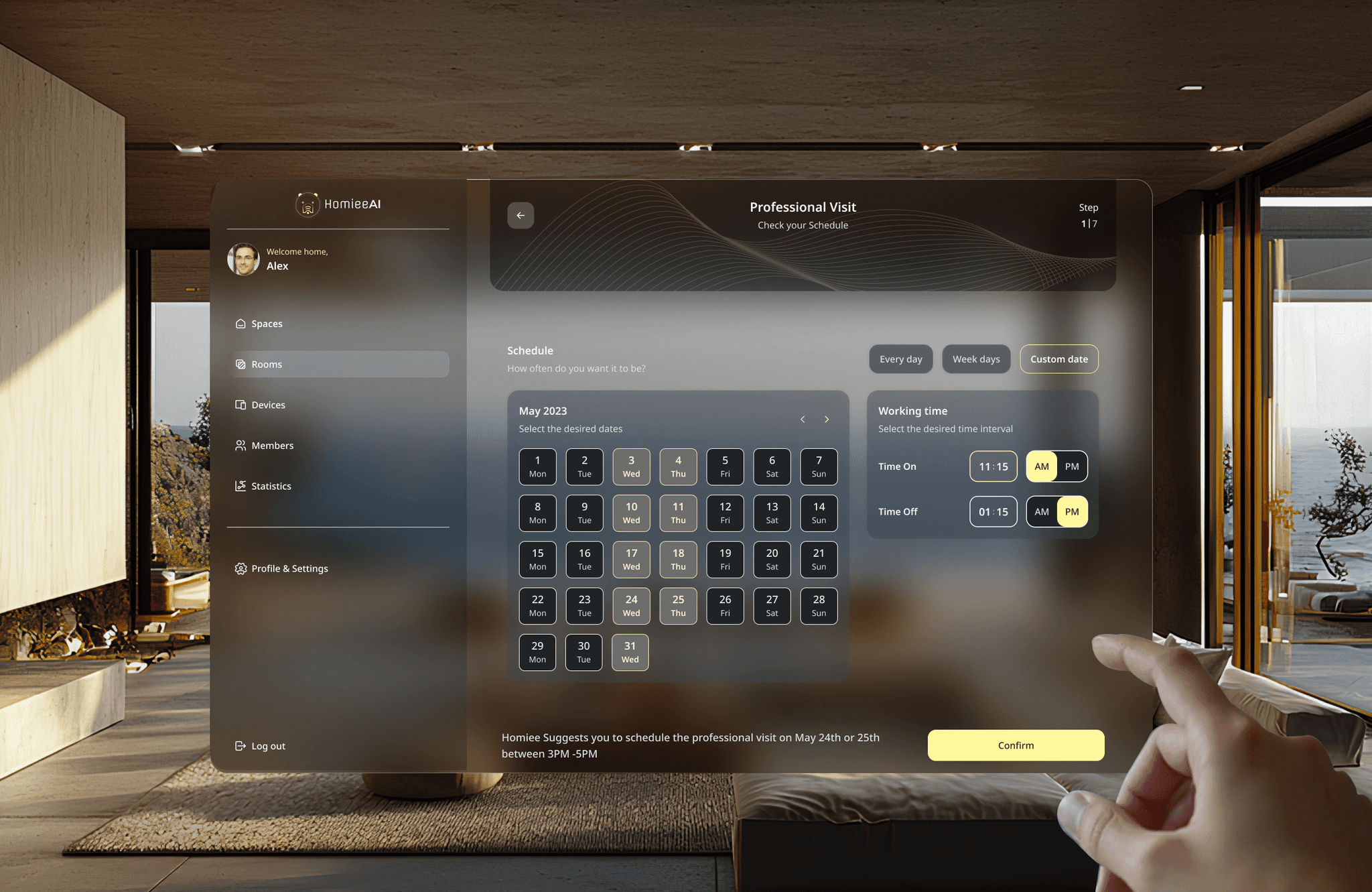
Water Leakage Book Repair
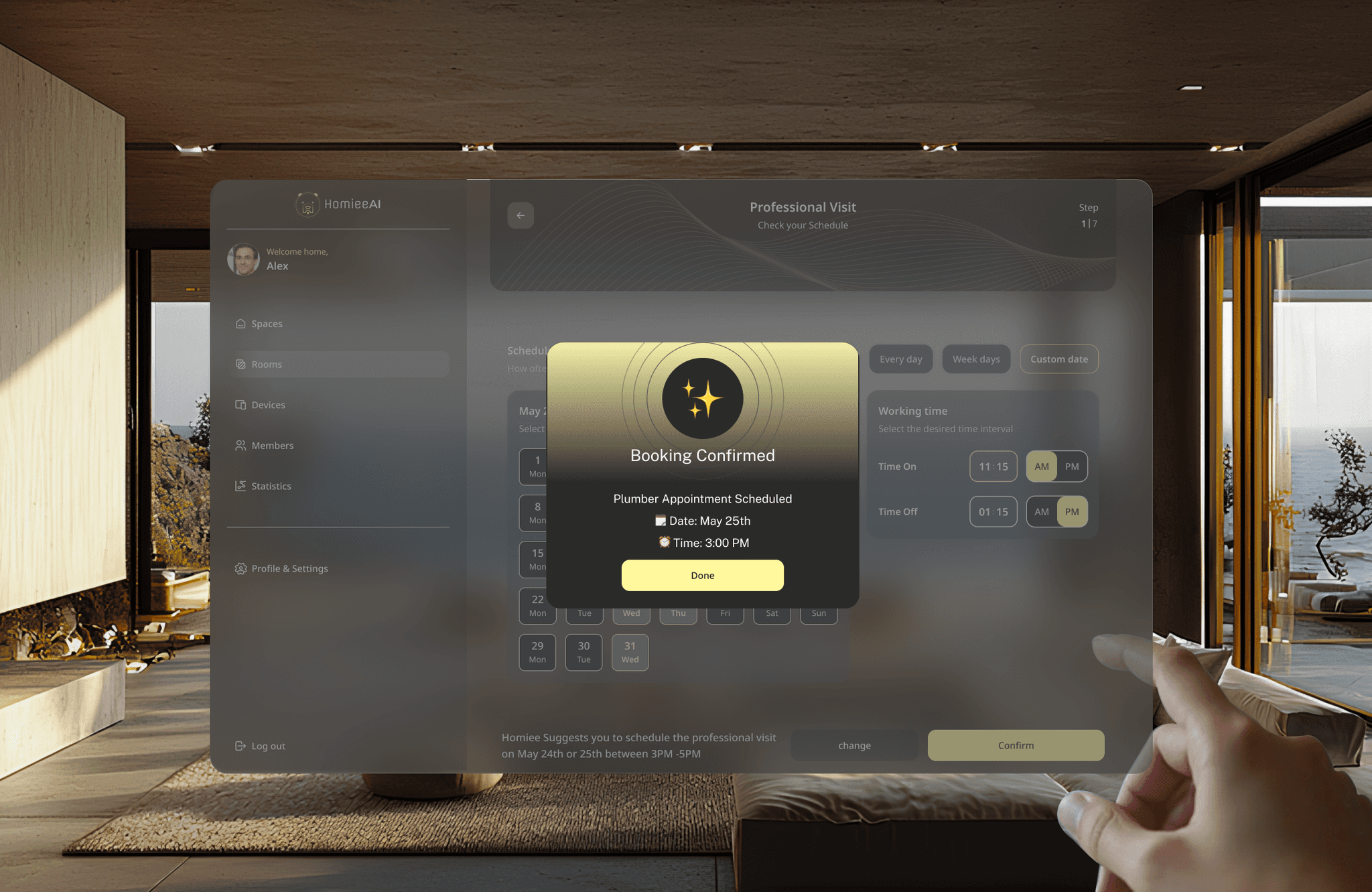
Water Leakage AI Analysis
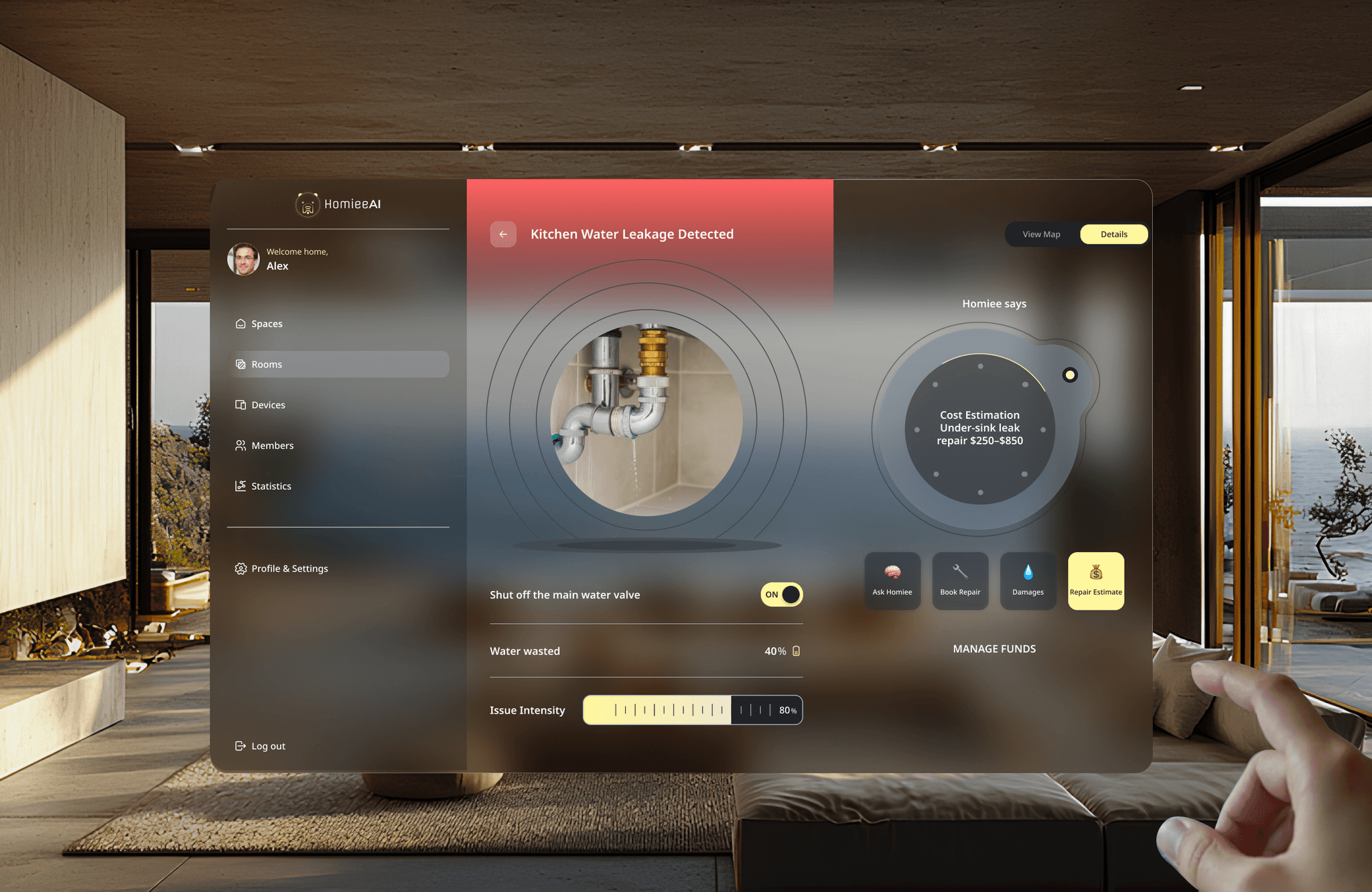
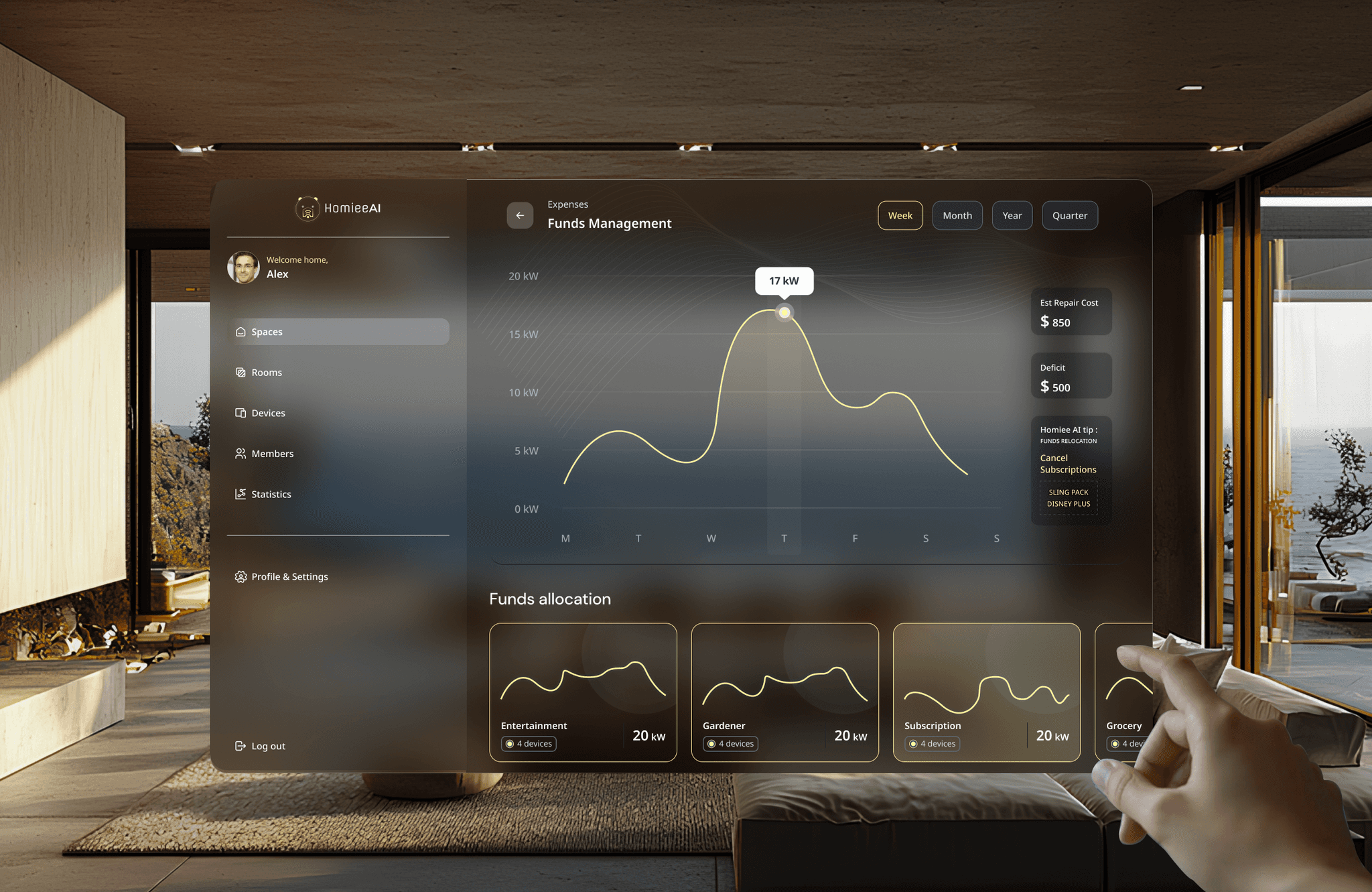
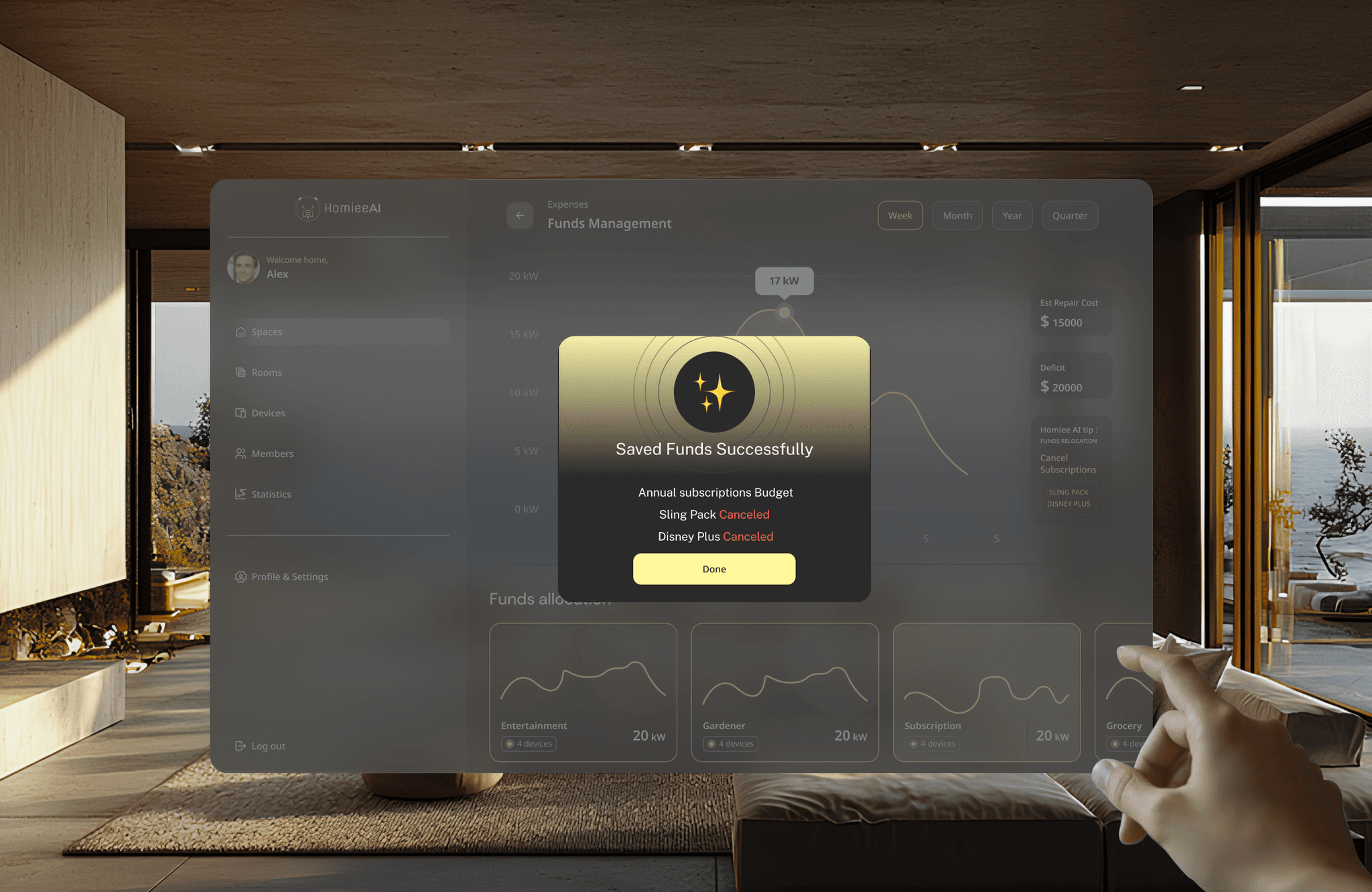
AI repair estimation and funds management
Ask Homiee AI next steps and solutions
🚧 Key Challenges I Solved
🎯 1. Designing for Multiple Contexts
Homiee is accessed through AR glasses, mobile, and wall projections. The challenge was creating an interface that adapts intuitively across formats without confusing users.
Solution: I focused on visual clarity and context-aware behavior—designing elements that float in AR but stay anchored in ambient projections, keeping each experience seamless.
🧭 2. Making AR Interactions Purposeful
AR isn’t about just placing UI in 3D space—it’s about making interactions feel intentional and useful.
Solution: I mapped key actions to physical spaces (e.g., showing a leak alert near the sink in AR), used glanceable layouts, and followed calm UX principles to reduce mental load.
👁️ 3. Bridging Physical and Digital Cues
Many smart home systems feel disconnected from the actual home. I wanted Homiee to feel grounded in real-world context.
Solution: Visual diagnostics were designed to overlay actual home layouts, so users could understand issues like plumbing faults or air quality in their spatial context.
🧰 4. Designing a Unified Maintenance Hub
Managing maintenance involves scattered tools: alerts, scheduling, finances, and how-tos.
Solution: I conceptualized a single interface for Homiee that blends AI-powered suggestions, scheduling, budgeting, and DIY guidance—making home care feel proactive and intuitive.
📚What I learned
Designing across devices means designing for behavior, not just screens.
AR/VR UX demands reducing cognitive load and preventing user fatigue.
Clarity, control, and transparency make users trust AI.
Context-aware design boosts relevance and responsiveness.
Unified systems simplify decisions and build confidence.