Aura AI
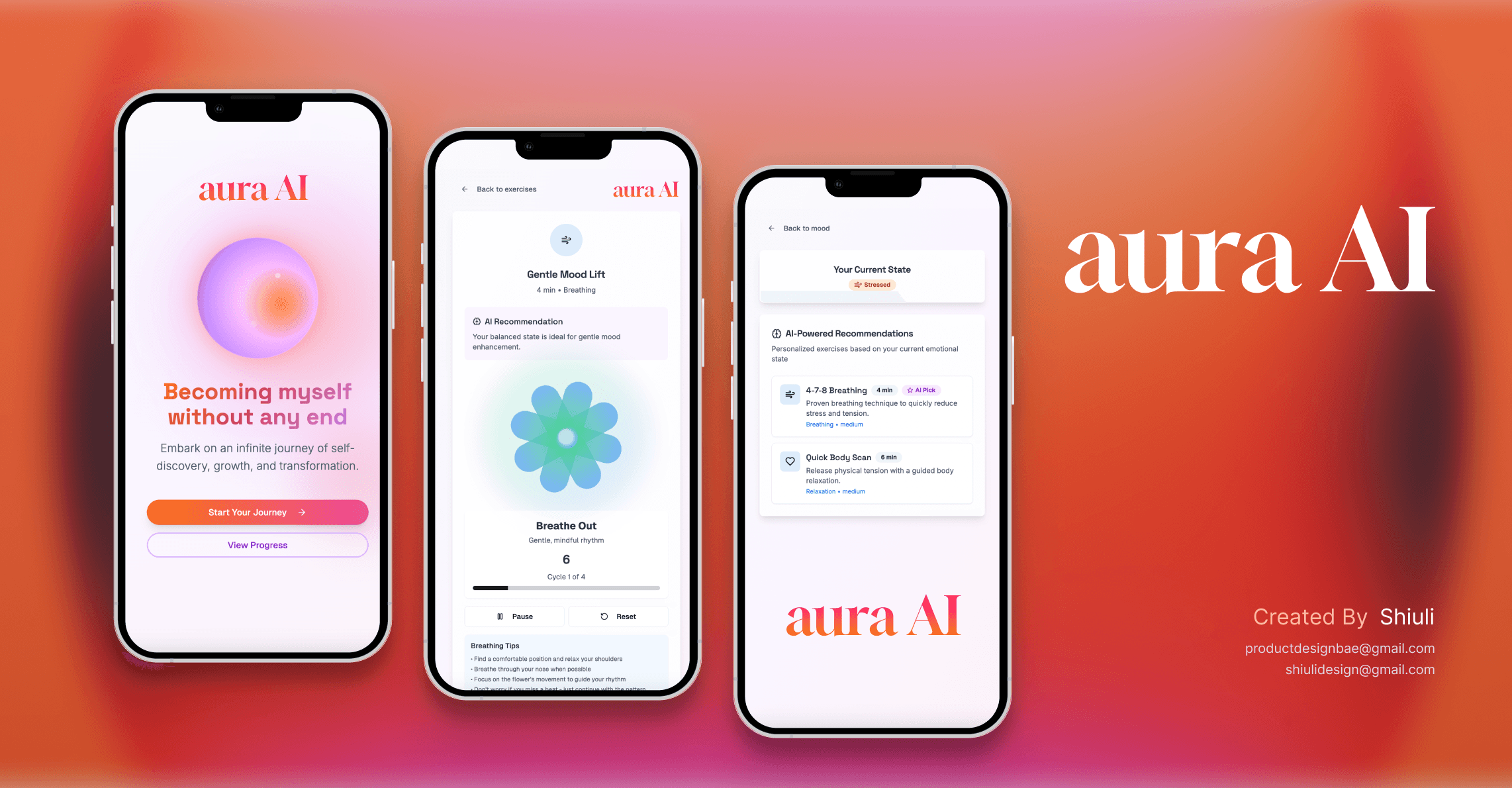
Aura is an AI-powered mobile wellness app designed to help users manage stress and improve their mental well-being in a personalized and accessible way. The idea for the app emerged from the personal experience of a UX designer (the project creator) who faced overwhelming stress while juggling a job search in a new country, managing a household, and adapting to a new culture. Recognizing that many others face similar challenges, the designer saw an opportunity to create an app that offers personalized wellness solutions tailored to each user’s specific stressors.
Vibe Coded Prototype
Client:
Self Initiated
Role:
Product Designer
Date:
July 2025
Duration:
On-going
What Was the Problem I Aimed to Solve?
In today’s fast-paced world, people often find themselves overwhelmed by the daily pressures of life. I was no exception, struggling to balance work, family, and personal well-being. As I searched for ways to relieve my stress, I realized that most wellness apps offered generic advice and weren’t adaptable to my changing emotional needs. There was a clear gap in the market for an app that could provide personalized, real-time stress relief that could seamlessly fit into the busy lives of people.
How Did I Identify Plausible Solutions?
With a background in UX design, I knew that the solution had to be simple, flexible, and personalized. I started by defining the core idea: a wellness app that uses AI to personalize content based on real-time mood tracking and emotional feedback. The app would offer short, bite-sized exercises—such as breathing techniques and guided meditations—that could fit into the user’s busy day.
After outlining the idea, I recognized that the real challenge would be creating a personalized experience—one that adapts to the user’s specific emotional state and daily stress triggers.
How Did I Organize the Insights and Features?
To solidify the insights gathered from my initial research and user feedback, I created an affinity map to identify key themes and map out related features for the app.
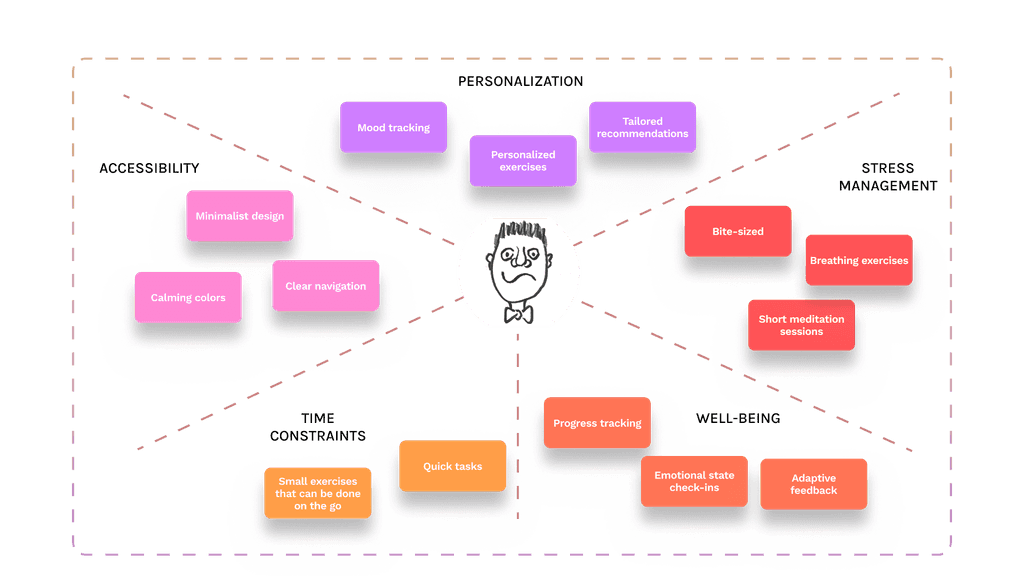
I realized that personalization and quick, accessible solutions are crucial for creating an effective, user-centered wellness app.
Who Are the Competitors and What Can I Learn from Them?
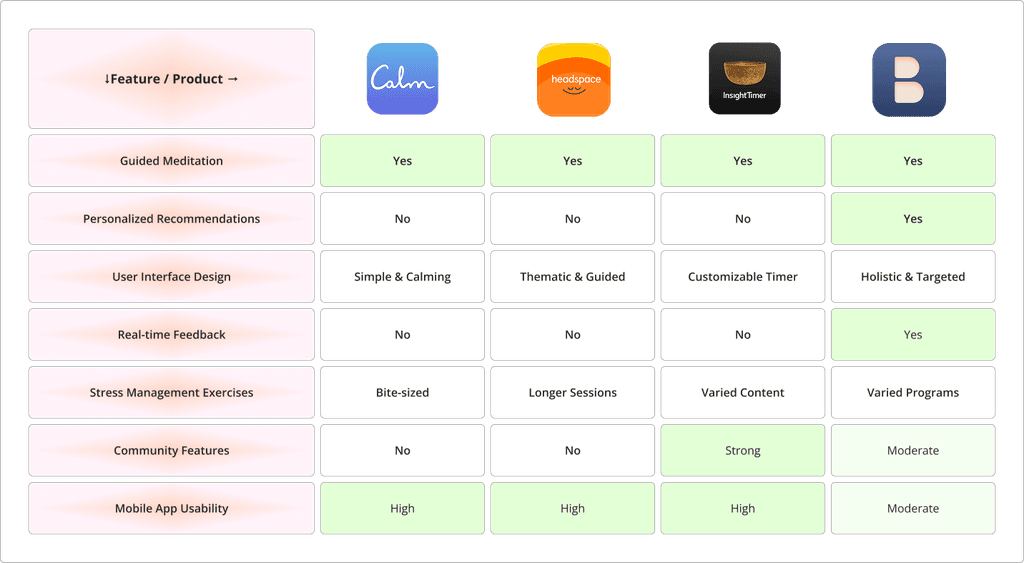
I found that Aura can capitalize on the gap left by competitors by offering real-time, AI-driven personalization, adapting content based on users' mood and emotional state.
By providing short, bite-sized exercises that cater to users' immediate needs, Aura stands out in offering quick, actionable solutions that fit seamlessly into users’ busy schedules, setting it apart from longer, generic meditation sessions.
What Did I Learn from User Feedback?
To validate the concept further, I conducted interviews with a variety of users from different age groups, genders, and cultural backgrounds. I wanted to understand their unique stressors and mental wellness challenges.
Key findings from the interviews:
Time Constraints: Many users struggled to find time for long meditation sessions.
Personalization: Users wanted content that was tailored to their emotional state at that moment.
Accessibility: They preferred simple, easy-to-navigate apps that didn’t overwhelm them with complex options.
These insights helped refine the features and design direction for Aura.
How Did I Build the Prototype?
Based on the insights from the research and interviews, I moved forward with building a vibe-coded prototype. The prototype focused on two key tasks:
Mood Logging: Users could log their emotional state each day, allowing the app to suggest tailored exercises.
Quick Stress Relief: The app would offer a short, personalized exercise—whether it was a breathing exercise or a quick guided meditation—based on the user’s stress level.
I used Figma to design the low-fidelity prototype, ensuring it was interactive and could be tested quickly.
What Did the Testing Reveal?
After building the prototype, I conducted usability testing with a small group of users. The key objectives were to assess how easy it was for users to log their mood, access the exercises, and whether the exercises were helpful.
Findings from testing:
Simplicity: Users appreciated the simplicity of the design and the ease of logging their mood.
Personalization: The real-time personalized recommendations were praised, with many users mentioning they felt the exercises were well-suited to their emotional state.
Engagement: Users reported feeling more engaged with the app when it offered personalized content.
What Was the Outcome of the Project?
After refining the prototype based on feedback, Aura showed strong potential as a personalized wellness tool. The app filled a gap in the market by offering short, personalized stress-relief exercises that adapted to the user’s emotional state.
The outcome of the project confirmed that real-time personalization—through mood tracking and adaptive content—was key to making users feel seen and supported in their stress management.
What Was the Outcome of the Project?
After refining the prototype based on feedback, Aura showed strong potential as a personalized wellness tool. The app filled a gap in the market by offering short, personalized stress-relief exercises that adapted to the user’s emotional state.
The outcome of the project confirmed that real-time personalization—through mood tracking and adaptive content—was key to making users feel seen and supported in their stress management.
What Did I Learn from the Process?
Designing Aura was a deeply personal journey. It taught me the importance of empathy and understanding the real-world struggles people face in managing stress. By creating an app that adapts to individual needs, Aura has the potential to empower users with the tools they need to manage their well-being in a way that fits their busy lives. This experience reinforced the idea that personalized, AI-driven wellness solutions could be the future of mental health apps.