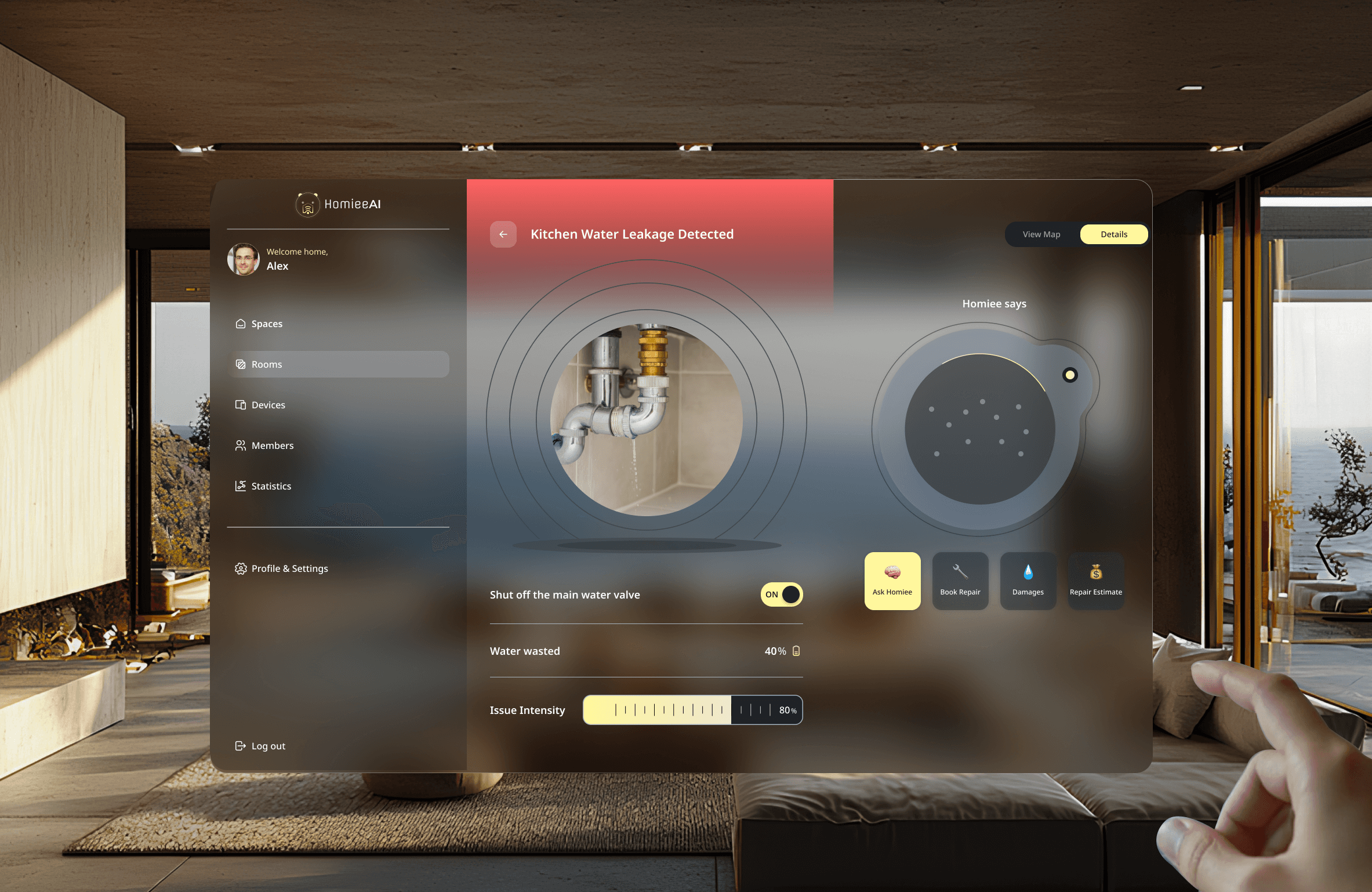
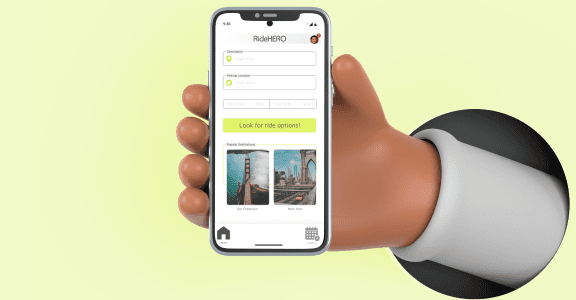
Prototype
🎯 My Impact:
From defining the research strategy to shipping polished high-res designs, I shaped DeepVista AI into a tool that doesn’t just respond — it thinks with founders, helping them work faster, decide smarter, and breathe easier.
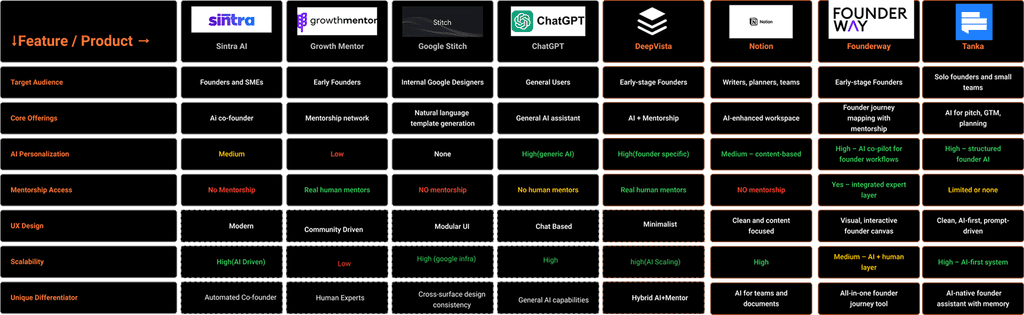
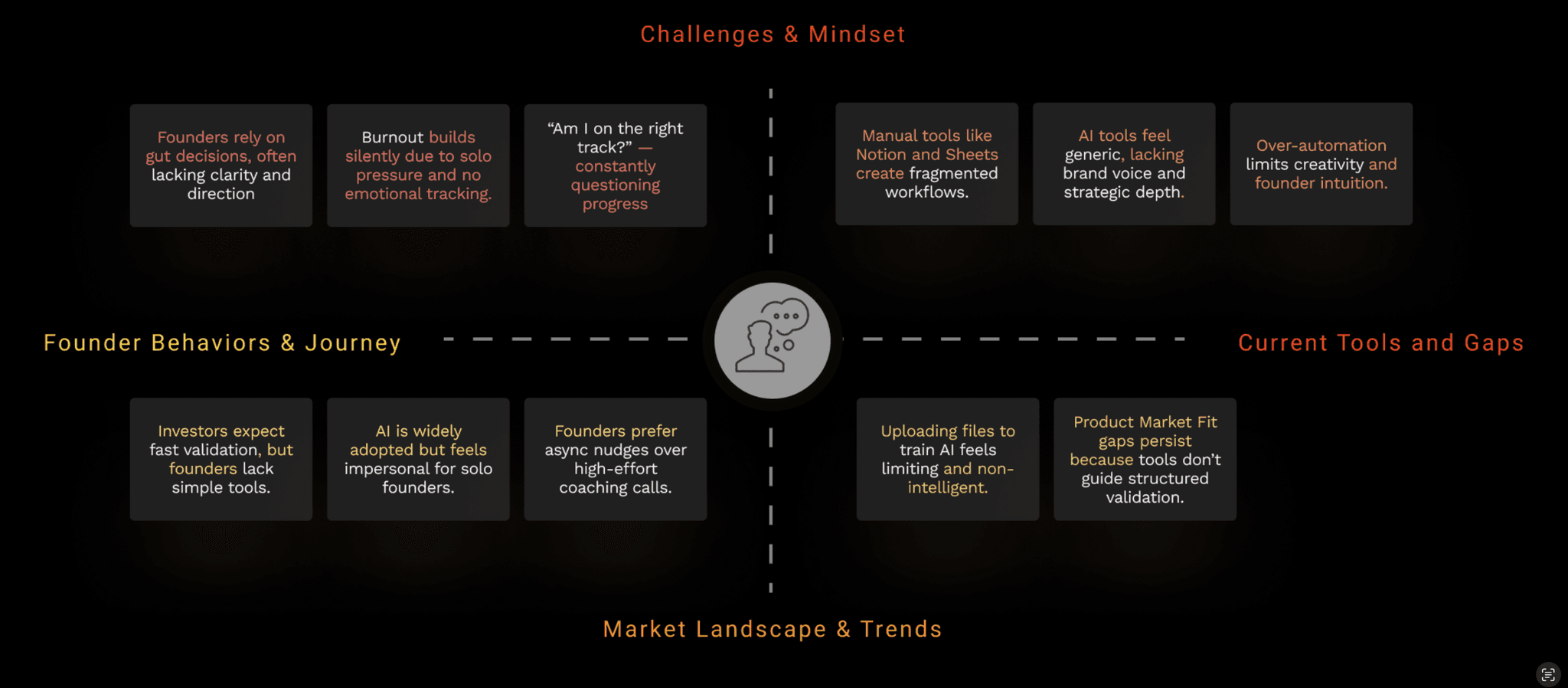
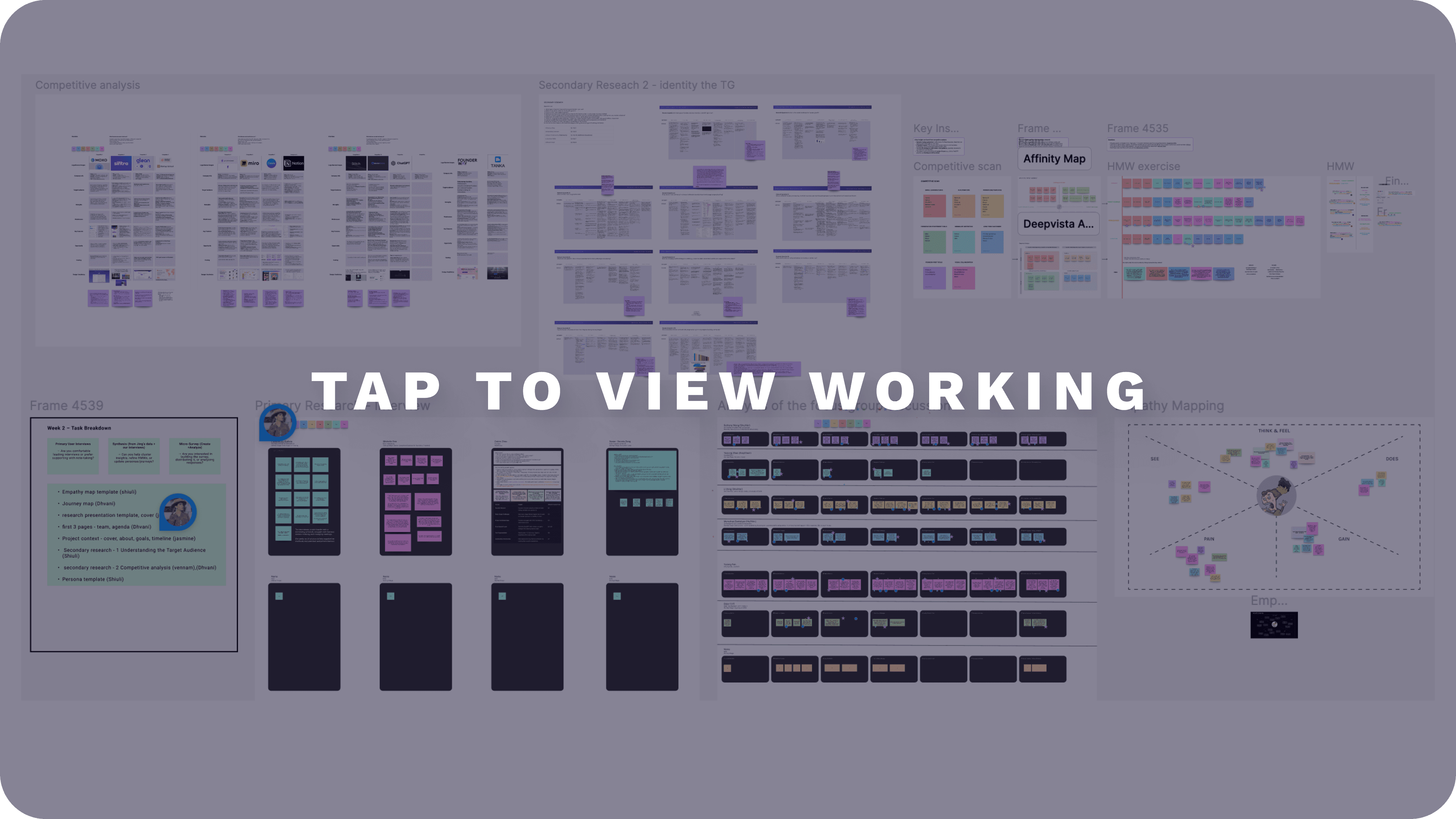
What Industry UX reviewers said about our UXR Presentation
“DeepVista was one of the hardest teams to research for. This is truly 0→1—no product, no precedent, and a very technical founder. You had to define everything from scratch. What impressed me most was how quickly your team synthesized all that scattered information and carved out a strong, clear direction.”
“Good research isn’t about following a checklist—it’s about delivering sharp insights that make people think. And your insights felt real, actionable, and valuable.”
He also called out that our deck worked really well as a read deck (for async sharing with stakeholders), but advised simplifying a few slides for live presentation:
“Some slides had too much text or felt caught between ‘read me’ and ‘skim me.’ A little more visual clarity will make those moments land even harder.”
Leon Zhang
“Designers have a superpower—visual storytelling—and I loved that you ended with your moodboard. It grabbed attention and gave a strong sense of where this product could go.”
She encouraged us to lead with insights, not just methods:
“Don’t tell me you did a competitive analysis—I can see that. Tell me what was surprising. Like: ‘Tonka AI is great at preserving contextual memory.’ That’s the gold.”
She also nudged us to prioritize quotes, maybe spotlight one powerful quote at a time to make the emotional moments pop.
Kathy Wang
“The narrative flow was tight. I appreciated how your visuals reinforced your message. But visually, watch out for overusing text styles or colors—it can scatter the user’s attention.”
He suggested the ‘squint test’—squinting at a slide to see what draws focus first. A great way to check hierarchy and avoid clutter. He also highlighted something that meant a lot to us:
“If you’re getting mostly visual feedback, it usually means your content is solid. If people are confused about what you're saying, that’s when you worry. You didn’t have that problem—your content was very strong.”
Johnny Huang